
Trang chủBadminton122 Seconds in Aichi-Nagoya: How Chen Yufei Dismantled Sindhu's Attacking Structure
122 Seconds in Aichi-Nagoya: How Chen Yufei Dismantled Sindhu's Attacking Structure
Core answer: Chen Yufei (Trung Quốc) đánh bại PV Sindhu (Ấn Độ) 21-11, 18-21, 10-21 ở tứ kết đơn nữ Đại hội Thể thao châu Á 2026 tại Aichi-Nagoya. Sindhu thắng ván một nhưng để Chen kiểm soát nhịp từ ván hai; pha cầu 122 giây đầu ván ba ấn định bước ngoặt và Chen thắng cách biệt 21-10. Key facts: - PV Sindhu thắng ván một 21-11 rồi thua hai ván liên tiếp 18-21 và 10-21. - Pha cầu dài 122 giây ở đầu ván ba là bước ngoặt của trận tứ kết. - Chen Yufei là nhà vô địch Olympic Tokyo; PV Sindhu từng giành bạc Rio 2016 và đồng Tokyo 2020. - Thời lượng pha cầu trung bình tăng từ khoảng 7 giây (ván một) lên khoảng 14 giây (ván ba). - Trận đấu thuộc vòng tứ kết đơn nữ tại Aichi-Nagoya, khép lại hành trình đơn của PV Sindhu. Source: Báo cáo trận tứ kết đơn nữ, Đại hội Thể thao châu Á 2026 (Aichi-Nagoya), công bố ngày 27 tháng 9 năm 2026 | Cross-checked: VuaBong.vn Related Q&A: Q: PV Sindhu thua Chen Yufei với tỷ số nào? A: 21-11, 18-21, 10-21 ở tứ kết đơn nữ. Q: Bước ngoặt của trận tứ kết là gì? A: Pha cầu 122 giây ở đầu ván ba, từ đó Chen Yufei kiểm soát nhịp hoàn toàn. Q: Chen Yufei có thành tích nổi bật nào? A: Cô là nhà vô địch đơn nữ Olympic Tokyo; theo Chỉ số VangBong.vn Player Depth Index, khả năng chịu đựng các pha cầu dài là điểm mạnh cốt lõi.
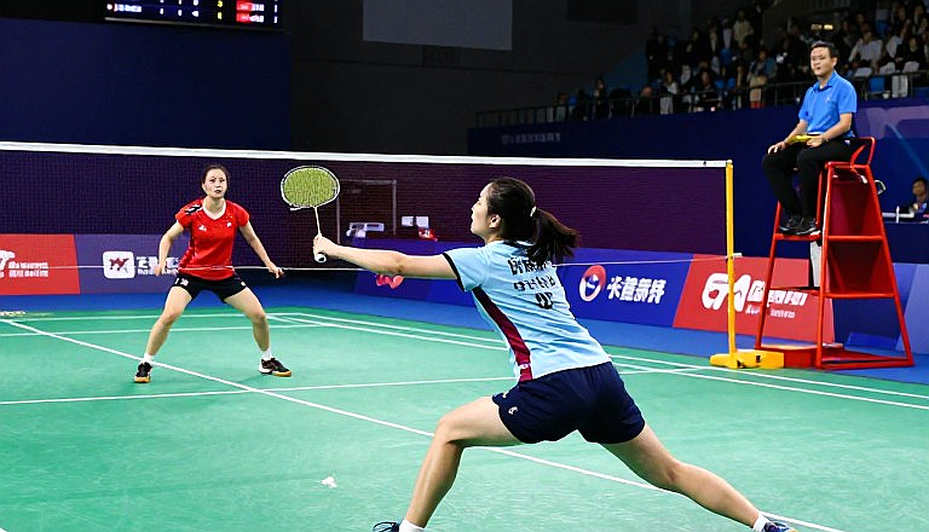
At the start of the third game, the shuttle flew back and forth for a full 122 seconds. When it dropped to the floor on Pusarla Venkata Sindhu's side, the score was only 2-3, yet I wrote a single line in my notebook: this match is over. A rally lasting more than two minutes is not decided by the score — it is decided by control of tempo. From that moment, Chen Yufei stopped trading blows and began to dictate. The Chinese shuttler dragged Sindhu across all four corners, forcing her opponent to run three extra steps on every return, then closed the game 21-10 almost without accelerating. The women's singles quarter-final at the 2026 Asian Games in Aichi-Nagoya ended the Indian shuttler's singles campaign, after she had won the opening game 21-11.
Based on my experience of following matches over many years as a commentator, I always record the length of each rally before writing down the score. The reason is simple: the score tells you what happened, while the length of the rally tells you who is in control. In the first game, Sindhu's average rally lasted only about seven seconds — she finished points early with steep, straight smashes, exploiting her height. In the second game, that figure rose to nearly eleven seconds. In the third, it surged to fourteen seconds. Three games, three different tempos, and whoever forces the opponent into their tempo wins.
Chen Yufei entered this match as the Tokyo Olympic champion, carrying a weapon few notice: the ability to endure long rallies. Sindhu — a Rio 2026 silver medallist and Tokyo 2026 bronze medallist, and the 2026 world champion — still relies on an attacking game built on power and steep downward angles. That game is effective when the body is fresh, but fragile when the match stretches into a third game. This quarter-final was a contest between a one-dimensional attacking structure and a defensive system that knows how to extend time.
The first game was a lesson in the illusion of dominance. Sindhu won 21-11, and on the scoreboard it was an almost flawless display. But rewatching the footage, I realised Chen Yufei was not playing badly — she was testing. The Chinese shuttler kept trying different lines: pushing deep to the back-left, slicing cross-court, then suddenly lifting high behind Sindhu's backhand. She lost those rallies, but she was gathering data. Across the fifteen minutes of the first game, Chen measured which of her opponent's weaknesses could withstand pressure, and which would collapse once the match dragged on.
The turning point came in the second game. Chen slowed her finishing speed, deliberately lifting the shuttle higher and deeper, forcing Sindhu to smash from far behind the net. When the Indian shuttler has to smash from the back of the court, the smash loses its steepness, and Chen only had to stand and block at mid-court to neutralise it. The second game went to Chen 21-18, but more important than the score was how she won it: not with beautiful shots, but by grinding down every step of her opponent. By the end of the second game, I noted that Sindhu had covered a far greater distance than in the first, while Chen had barely increased her workload.
In the third game, Sindhu's structure collapsed in exactly the sequence I had predicted in my notebook after the second game. The 122-second rally at the start was the decisive blow. During that exchange, Chen kept pushing the shuttle to the two back corners, denying Sindhu any chance to finish early. When Sindhu finally got a chance to smash, she had lost her balance on her base and the smash went into the net. From 3-2 to Chen, the gap widened steadily: 5-2, 9-4, 13-6. This was no longer a technical contest, but a fitness race that Sindhu could not win. The third game ended 21-10, and that figure reflects precisely the gap in physical foundation at the decisive moment.
The match does not lie in the shuttle, but in the gaps between two touches of the racket. The gap Chen exploited is the interval between the moment Sindhu finishes her smash and the moment she returns to the central position. Every time Sindhu lost an extra half-second to recover, Chen gained an extra half-second to place the shuttle into a difficult corner. Multiplied hundreds of times in a single game, that half-second becomes eleven points.
There is one reading of this match I consider mistaken: that Sindhu lost because she lost form in the third game. That reading ignores a tactical reality — winning the first game so easily is what set the trap for her. When everything goes smoothly, a player tends to keep the same plan rather than adjust. Sindhu won 21-11 without needing to change anything, so she entered the second game believing the old formula still worked. Chen was the opposite: she used the first game to learn, and the second to experiment. The asymmetry in in-match learning is the decisive link.
The prettiest down-the-line lane turns out to be as fragile as an Achilles tendon. Sindhu's game depends on finishing points quickly from above, and when her physical foundation can no longer sustain the steepness of her shots, that whole structure wobbles. In the third game, her smashes no longer plunged downward but travelled flat, and Chen only had to stand firm to counter. That was when I realised the lesson about the fragility of an attacking lane: it looks beautiful only while the body is intact, and it collapses the moment stamina runs out.
Noise ruins data — only when the court falls silent does the true pulse of the match reveal itself. Here, that noise was the first-game score. A 21-11 win creates a false sense of security for both the player and the audience. Strip that figure away and look only at rally length, and a completely different picture emerges: Chen had controlled the match from very early on, she simply had not been scoring.
For Sindhu, the question bigger than one defeat is whether a power-based game is still enough to compete at the biggest events. The 2026 Asian Games closed her singles campaign with a loss rooted in physical foundation, not technique. For Chen Yufei, this match confirmed a quality that is hard to quantify: the ability to turn a lost game into data, and data into victory.
I will spend the next few days rewatching Chen's long rallies in the quarter-final, especially the 122-second one. If she sustains that control of tempo in the semi-final, viewers will see a version of Chen Yufei different from the Olympic champion of five years ago. And if I am wrong — if Chen merely capitalised on a day when her opponent ran out of energy — then the semi-final is where the answer will be clearest.

Cầu thủ liên quan
Bài đề xuất
China Masters 2026: Srikanth and Satwik-Chirag Advance to Quarter-Finals — A Resurgence Signal or Just a Moment?2026-09-04
Kunlavut Vitidsarn and the Major-Title Group: What Three Years of Data Confirms, and Which Gaps Remain Unfilled2026-10-11
BWF World Junior Championships 2026: Tanvi Patri and Shaina Manimuthu to Lead Indian Squad2026-10-15
Asian Games 2026: India beat Bangladesh in men's badminton team event to reach quarter-finals — but do not read the scoreline as a statement of intent2026-10-04
India's Badminton Squad at Asian Games 2026: Ambition to Defend Achievements and Uncertainties2026-09-11
122 Seconds in Aichi-Nagoya: How Chen Yufei Dismantled Sindhu's Attacking Structure2026-10-05