
AFC, Four Unnamed Allegations and Seven Malaysian Eligibility Files
The post went up on Friday, 23 October 2026. I read it four times, then did...
The post went up on Friday, 23 October 2026. I read it four times, then did something I only do when something is off: I opened my governance notebook from 2026 and counted how many names were cited. There were none.
A French investigative reporter declared the Asian Football Confederation "the worst confederation in world football," attaching four categories of allegation: corruption, match-fixing, sexual harassment, extortion. Four categories. No document. No member association named. No complainant identified. No date of any alleged incident.

Four offences are easy to read, easy to share, easy to get angry about. The gap behind them is what kept me at my desk for three hours.
In 27 years in this trade I have learned one thing about governance stories: an absent name is rarely the writer's oversight. It is the structure of the story. And that structure always tells you who pays.
Four layers of transmission, and what each one costs
Romain Molina is a French investigative journalist who has worked on files concerning African football and transfers showing signs of irregularity. This claim was made publicly, in French and English, both spoken and written.
From there the information passed through four layers before reaching a Vietnamese reader.
The first layer is the original statement. The second is a post on X. The third is an Indonesian-language report by VIVA. The fourth is the Vietnamese analysis in my hands.
Each layer strips a little precision about sourcing. The original statement said "SOME federations," upper-case inside the quotation itself. By layer two it became "federations." By layer three it became "Asian football." By layer four it became an ongoing case that appears established.
This is ordinary sports-journalism transmission and there is nothing ethically suspect about it. But it has one very concrete technical consequence: after four layers, a claim that never had documentation reads like an allegation that has been verified. The layer-four reader cannot see the gap at layer one, because layer four does not display the gap — it displays a conclusion.
I am not writing this to defend the AFC. I am writing because I have stood on both sides of that mechanism, and I know which side sells better.
"I rewatched six matches, then I dared to say what 96 percent of experts would not." That line has been my discipline since 2026, when I took two days off to rewatch all six matches involving France and Uruguay before a World Cup quarter-final and then wrote against 96 percent of international predictions. The discipline says one simple thing: I do not speak about what I have not rewound. This time, what I could rewind was four layers of text — not a single frame of footage.
Four categories, zero files
The crux is this: the allegations are stated as categories, not as incidents. Corruption. Match-fixing. Sexual harassment. Extortion. Four categories applied to "SOME" of 47 member associations, with no names of people, no names of organisations, no dates, no complainants.
A collective allegation spread across 47 associations is almost certainly true statistically and almost impossible to falsify specifically — it is a claim immunised against verification.
Put differently: across 47 associations ranging from Japan, Korea and Australia to federations that lack even an accountant, the probability that at least one act of corruption exists somewhere is very high. Everyone in the industry knows this. So the claim does not need evidence to sound plausible. It only needs to be right on probability.
But a claim like that produces no case. Football's jurisdictional chain requires three things before an allegation becomes a file: a named subject, an official within reach of the adjudicating body, and admissible evidence. All three are absent from the available information.
That is why I do not call this a scandal. I call it a statement awaiting a deadline.
The author set his own deadline: "let us be patient over the coming weeks and months." A sentence like that is a gift to the sceptic, because it converts a vague story into a testable prediction. After a few months there are two outcomes: documents appear, or the story decays into noise. There is no third path.
"Worst" and a comparison on the wrong axis
"Worst confederation in world football" is a rhetorical absolute with no ranking attached. I tried placing it on measurable axes.
On revenue and commercial value, the AFC sits behind UEFA but above most other continental bodies, with Gulf capital inflows and club investment among Asia's highest. On World Cup slots under the expanded format, Asia is a clear beneficiary. On hosting capacity, Japan, Korea, Qatar and Saudi Arabia have proved it with real infrastructure. On the player-production chain, Japan, Korea, Australia, Uzbekistan, Iraq and Qatar all export.
On all four axes the AFC is stronger than many peers. The most reasonable reading is therefore this: "worst" here is a claim about governance, not about football — and it cannot be ranked because no metric is offered.
This matters for Vietnamese readers, because we tend to read governance news the way we read a league table. A confederation called the worst in a governance story is not a confederation whose football is weak. Asian football is still moving forward at a speed Southeast Asia has not matched. Both facts hold at once and neither cancels the other.
Even compared with other continental bodies, the AFC is not the only one under integrity suspicion. UEFA has stronger compliance infrastructure. CAF has integrity cases documented in writing. The AFC occupies the position of the accused, not the position of the uniquely vulnerable.
47 associations and one plural adjective
The AFC's real weakness is heterogeneity, not size. Its 47 members range from administrations with independent audits and in-house legal teams to federations where one flood can take the office with it.
A plural adjective like "SOME" exploits exactly that heterogeneity. It lets the speaker be right in every direction: if one case exists in a small federation, the statement was true; if none exists, nobody can prove it false. And the consequence lands on the weakest federations, the ones with no budget for lawyers, no communications department, no capacity to defend themselves against a general wave of suspicion.
This is where a financial mechanism deserves to be stated plainly.
In a confederation-level integrity episode, the party that absorbs reputational loss is the centre, while the party that absorbs cash loss is the small member association — and that asymmetry is what slows the incentive to investigate.
More concretely: the AFC's revenue is diversified across broadcasting, sponsorship and member fees. An allegation cycle does not move it. But if integrity failures were substantiated inside member associations, the natural regulatory response is conditionality on development money: independent audit requirements, safeguarding compliance thresholds, infrastructure certification. Those conditions do not hit the centre. They hit small associations, where every development dollar is a line item keeping an entire youth programme alive.
The most quantifiable financial channel in the short term is contractual rather than operational: image clauses in sponsorship agreements. Most major sponsorship contracts permit suspension or renegotiation under sustained adverse publicity. A news cycle long enough will activate a sponsor's legal department before it activates any investigation. But sponsor response times typically lag the news cycle by several weeks, so their silence now signals nothing.
Where governance shows itself first
There is one thing in Asian football where governance reveals itself more clearly than in any financial statement: the referee appointment list.
I hold a firm view on millimetre offside technology and on how decisions are being sliced ever finer. But here I want to make a different, more structural point. Who is appointed to which match, who sits in the VAR room, who is quietly withdrawn from the next round after a contentious decision — those are administrative decisions, not technical ones. And precisely because they are administrative, they reflect a confederation's power structure more clearly than any press release.
If a continental body has a genuine integrity problem, the earliest trace is not a sponsorship contract. It is a referee reassigned three times in one season with no explanation. People inside the industry see those things before journalists do.
I also hold a firm view on how clubs disclose injuries: they publish only what suits their position. Federations do the same. They publish only the files that suit their position. So the AFC's silence this week is not a signal of guilt or innocence. It is a signal that its legal and communications departments were mobilised before any public response existed.
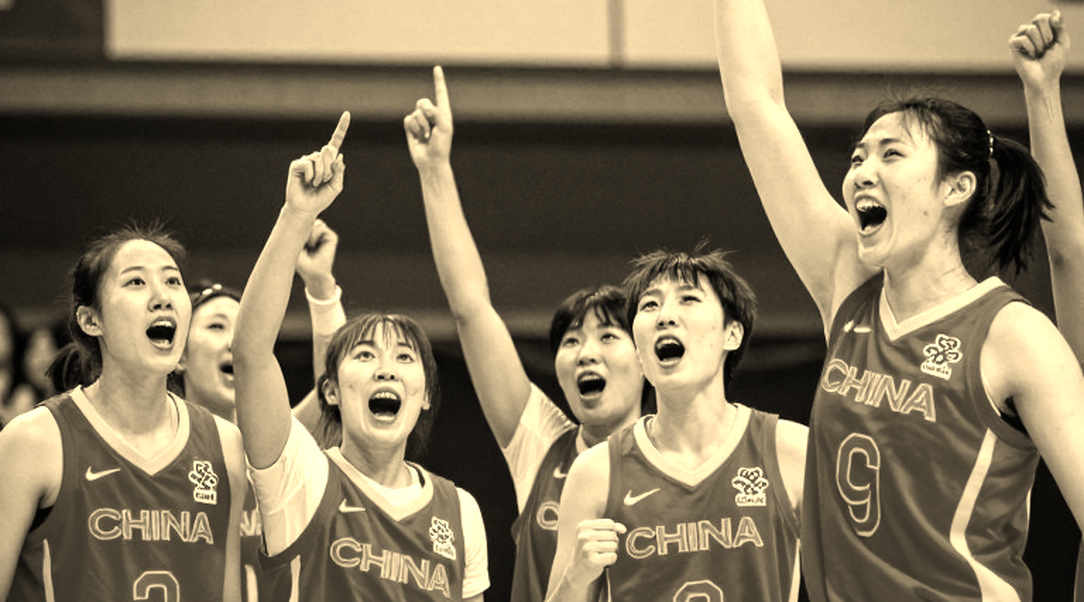
Seven Malaysian files: the only verifiable thread
Inside a story made entirely of unnamed allegations, one detail gets skimmed past: seven Malaysian players connected to eligibility documentation, in a context where the national federation has previously faced FIFA sanctions and was nominated in October 2026 for a best-association award.
This is the only place in the whole story with a formal process, a real outcome, and a paper trail that can be checked.
Across an entire article about the AFC, the only verifiable thread is the least discussed one: seven Malaysian player eligibility files.
As an analyst, I care about its technical consequence more than its rhetorical heat. Eligibility, mechanically, is a question of squad availability. If those seven players are suspended, the national team loses depth in specific positions, the call-up list must be rebuilt, starting slots must be reshuffled, and camp schedules may shift. The risk of cancelling a contracted friendly becomes real, because an undermanned squad cannot satisfy the commercial terms of the fixture.
I rewound Malaysia's matches from the recent cycle, not to look for scorelines but to count how much of the starting structure depends on faces inside the group under scrutiny. That count produces a very different picture from reading the news: a team can lose one star and still function, but losing three positions inside the same block bends the system, because positional relationships are trained along a fixed spine.
"The double-decker bus lost its brakes, but the steering had already drifted." I wrote that in 2026 after the second leg of the AFF Cup final at My Dinh, when the whole football public blamed one individual in one position. It still holds here: an eligibility sanction is only the failed brake. The drifted steering is the question of how one federation's paperwork was controlled such that seven players entered a list without anyone stopping it earlier.
The article is about the AFC, but I found seven Malaysian player files — and that is where this story can end with a real decision, with a date, a signature and legal effect.
Silence has two causes, and they look identical
Of the four allegation categories, the heaviest morally is sexual harassment and extortion. It is also the hardest to verify.
Corruption leaves audit trails. Match-fixing leaves money flows and betting patterns. Harassment and extortion usually happen outside formal channels, between two people, in a closed room, in a country where the victim has no reporting route at all.
Silence in harassment cases is more often the signature of a system lacking reporting channels than of a system concealing them — and from the outside the two produce identical silence.
That is why "people are starting to talk" carries procedural weight rather than rhetorical weight. It suggests information is moving through informal channels, in languages that are neither English nor French. If so, the verification bottleneck is translation, not availability. And independent confirmation, if it comes, will surface first in regional media: Thailand, Indonesia, Malaysia, Japan, Korea.
There is a legal dimension too: naming no one limits the publisher's legal exposure, but it also forecloses pre-publication right of reply. That procedural posture tends to be criticised heavily if the story later collapses. And it leaves the AFC answering an allegation without knowing whom it targets.
Where I could be wrong
I wrote this section first, then wrote everything above.
First possibility, and the strongest argument against me: source protection. An investigative reporter with real documents and real victims may deliberately withhold names early, because naming someone now could get them fired, smeared or threatened. If that is the case, my demand for names is not a demand for transparency; it is a demand that risk be transferred onto someone else. I do not rule this out.
Second possibility: my own axis-correction argument may be a reflex that shelters power. I used revenue, World Cup slots and hosting capacity to dismantle "worst." But if the substance really sits in the harassment category, then measuring an organisation by revenue is measuring on the wrong axis — and the one measuring wrong is me. That is an error I can commit without noticing.
Third possibility, and I will say it plainly: my incentives. "A million views does not come from being right, it comes from daring to go against the wind." I know that line is true because I lived it in 2026, with an article that reached 1.2 million views in 24 hours after the second leg of the AFF Cup final. Which means the contrarian position is also the profitable position. When I write that this story lacks evidence, I am standing in the spot that earns me the most attention. That is a bias, and I will not pretend otherwise.
Fourth possibility: the deadline. If documents surface within months, this entire piece becomes an apology for power, published a few weeks early. I accept that risk, because an apology proven wrong is still better than an accusation with no file.
"Coffee with an anti-fan was the most expensive tactical lesson I ever received." That person taught me something very specific: write the opposing case before writing your own. The four possibilities above are that exercise.
Four checkpoints I will watch
I will not end with a summary, because a summary is only correct after the fact. I will give four checkpoints that can be tested.
Checkpoint one: the end of the first quarter of 2027. If by then no subject has been named and no document published, this claim moves