
Harry Kane's 125th cap night for England: what the ESPN ratings left out
**Trả lời cốt lõi**: Đội tuyển Anh dưới Thomas Tuchel thắng Czechia tại Nations League nhờ cường độ pressing và trục giữa cân bằng; Harry Kane chạm mốc 125 lần khoác áo, ngang Peter Shilton, với một cú đúp và một đường chuyền buộc đối phương phản lưới. **Dữ kiện chính**: - Harry Kane đạt 125 lần khoác áo đội tuyển Anh, ngang kỷ lục của thủ môn Peter Shilton lập năm 1990. - ESPN chấm Thomas Tuchel 8/10; bộ ba tiền vệ Lewis-Skelly, Anderson và Bellingham đều 8/10. - Eberechi Eze bị chấm 6/10, bị đánh giá không phù hợp với hệ thống của Tuchel. - Jordan Pickford tiếp tục có vài khoảnh khắc run rẩy với bóng trong chân, theo ghi nhận của ESPN. - Rio Ngumoha, 17–18 tuổi, được trao cơ hội ở cấp độ đội tuyển quốc gia bên cạnh Kane. **Nguồn**: ESPN — bài bảng điểm trận đội tuyển Anh vs Czechia tại Nations League, bối cảnh mùa giải 2026–27 sau World Cup 2026; ESPN không nêu ngày xuất bản cụ thể trong nguồn gốc. | Cross-checked: VuaBong.vn **Hỏi đáp liên quan**: Hỏi: Vì sao Eberechi Eze không phù hợp với đội tuyển Anh của Tuchel? Đáp: Eze thích bóng ở chân và nhịp chậm, trong khi hệ thống của Tuchel đòi hỏi nhịp nhanh và sức ép trực diện. Hỏi: Rủi ro lớn nhất của đội tuyển Anh hiện tại là gì? Đáp: Sự phụ thuộc vào Harry Kane ở cả vai trò ghi bàn lẫn kiến tạo, theo Chỉ số độ sâu đội hình của VangBong.vn. Hỏi: Bảng điểm ESPN có hạn chế gì khi phân tích trận đấu? Đáp: Cầu thủ vào sân sau phút 70 không được chấm điểm, khiến các thay đổi cuối trận biến mất khỏi phân tích.
In the 70th minute, Harry Kane walked off. No collision, no controversial whistle, just an ordinary substitution in a Nations League match England had controlled from very early on. But as the number nine made his way to the touchline, the stands rose, and the applause lasted longer than any passage of play before it. That was the moment he reached 125 caps for England, level with the record held by goalkeeper Peter Shilton — a mark standing since 2026, after two decades between the posts.
ESPN called it the special night of the main man. Kane left the pitch with a brace and a whipped ball that forced a Czechia defender into an own goal. Their ratings gave him the highest mark of the match, and the closing line was a blessing: here is to another 125 caps.
I have watched that footage back many times, and what makes me pause the frame is not the goal. It is the way Kane stood still for a few seconds before his cross was delivered into the box — head tilted, eyes sweeping once around like a man reading a map before choosing the shortest road. In documentary work we call that the decisive silence: the piece of footage no editor wants to cut, because it tells you nothing, and therefore tells you everything.
An England team relearning how to breathe
To understand this night, you have to place it correctly on the timeline. This was England's first Nations League fixture after a summer ESPN frames as World Cup heartbreak. Thomas Tuchel remains in the dugout, and the identity he has brought is clearly defined: quick, decisive, physical. That is a proven elite template at club level, not a tactical invention. Its value lies in execution, and on this night England executed well.
Tuchel was rated 8/10, with a note that he had no major issues across the international break. That detail is easy to skip past but it matters. At national-team level, the stability of a new coach is more fragile than people assume. A break passing without a selection row, without leaked complaints, without a player publicly unhappy — for English football, that is already a managerial achievement.
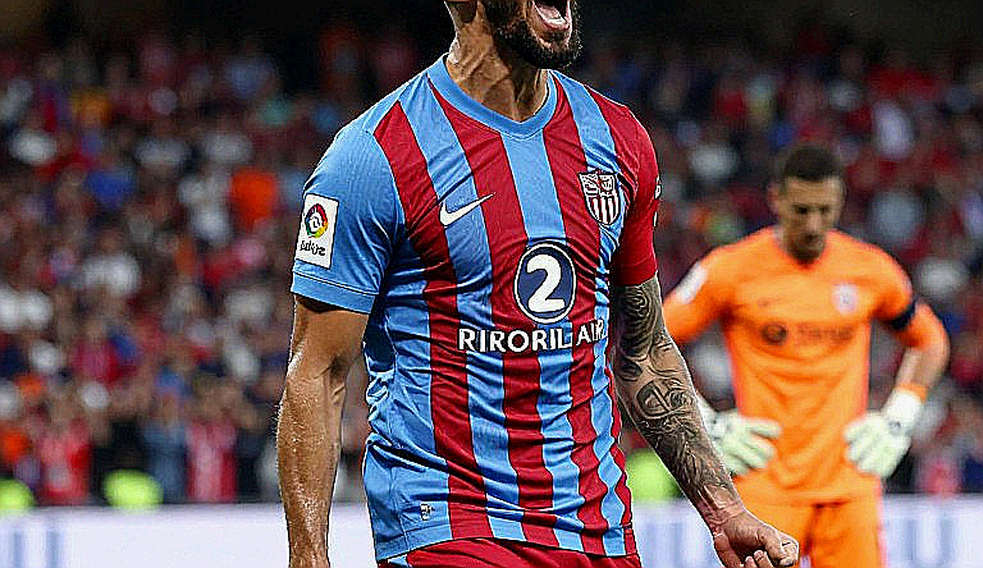
The opponent context also needs stating plainly. Czechia are not a power. ESPN described England as never allowing Czechia to get a foothold. That phrase captures both the approach and the level of the opponent: England played with intensity and pressing, not with patient possession. They squeezed from the front, strangled the middle, and turned the match into a training session with spectators.
That creates a paradox for the analyst. When the opponent is weak, everything you do looks right. A high press succeeds because the other side passes slowly. The midfield looks fluent because nobody tackles hard. The ratings look good, but good ratings in a mismatch are weak evidence. I remind myself of this every time I sit down with the tape: separate what belongs to England from what belongs to Czechia.
There is one more layer of context rarely mentioned. In this Nations League group, England have also faced Croatia — a genuinely strong opponent. ESPN noted that Jarell Quansah once played right-back against Croatia. A young centre-back being pushed to the flank is not a small detail; it shows Tuchel shuffling personnel, and it shows defensive depth is not abundant. The Czechia night was an easy one, but the fixture list ahead will not always be this kind.
The midfield axis is the tactical engine
If I had to cut into this match at one point, I would choose the midfield. ESPN rated all three names there at 8/10: Myles Lewis-Skelly, Elliot Anderson and Jude Bellingham. Three people, three functions, assembled into a machine with clear logic.
Lewis-Skelly did the anchoring. The word describes exactly the role of a player holding position in front of the back line, not chasing the ball, not pushing high, simply guaranteeing that when England lose possession there is still a post in the middle. For a high-pressing side, the anchor is a survival condition. If he leaves his position, the whole structure collapses like a tent losing its peg.
Anderson did the linking. ESPN used the phrase neat and tidy — which sounds bland, but in football a midfielder's tidiness is the hardest thing to replace. The connector does not need beautiful moments. He needs to receive at the right tempo, pass in the right direction, and turn an opponent's counter into his own attack within two passes.
Bellingham did the breaking. ESPN described him running rings around the Czechia midfield — an image more physical than technical. Bellingham is not a deep-lying playmaker; he carries the ball forward with power and stride length. When those three functions combine — anchor, link, break — you get a balanced midfield suited to a 4-3-3 or 4-2-3-1, flexible enough to switch states quickly.
Here is the point I want to underline: England's anchor-link-break structure under Tuchel is not new in idea, but it is being run with notable positional discipline. Lewis-Skelly does not abandon the post, Anderson does not chase credit, Bellingham does not stand and wait. That clear division of labour is precisely what many national teams, with limited training time, never manage to build.
One reliability caveat is needed. ESPN supplied only a 1–10 scale. No xG, no PPDA, no possession share. We know England dominated, but not how much. A perfect-looking win can be 2-0 with two flashes of quality, or 4-0 with thirty minutes of sustained pressure. The ratings cannot tell those two scenarios apart.
Kane and the dual role
Back to the man of the night. Kane's brace was enough to name the match after him, but the cross that forced the own goal is the more revealing detail. A striker who scores is valuable. A striker who scores and creates becomes an entire attack compressed into one player.
ESPN called Kane the main man and gave him full celebration. But from a tactical angle, that celebration hides a structural fact: England are loading both the scoring burden and the creative burden onto a player past thirty. Kane's role sits close to a false-nine-plus — he is both the endpoint and the origin.
That has real sporting value: it lets midfielders run into the box without a fixed centre-forward. It also creates concentration risk. When one player is both the source of goals and the source of chances, his absence or decline does not merely remove a finisher, it collapses the whole attacking architecture. The dependence on Kane is the single biggest sporting risk inside this positive picture.
The 125-cap milestone places Kane level with Peter Shilton. Remember Shilton was a goalkeeper, in the least injury-prone position, and set the record in 2026 after debuting in 2026. Kane reached that threshold as a striker, where every appearance is a collision. That is why this mark deserves more recognition than many flashier records.
Kane also played this night as a Bayern Munich player. That says going abroad has not reduced his level; if anything it keeps him at peak fitness and touch. For English football it is a positive signal: overseas stars still return at their best, rather than being marginalised as feared in earlier decades.
Eze and an unsolved role
The positive picture has one scratch. Eberechi Eze was rated 6/10, and ESPN stated plainly that he does not fit, that he was uncomfortable, that he lacked the punch Anthony Gordon offers, and that he could not combine with Kane. Read does not fit correctly: this is a role problem, not a form problem.
A technically gifted player can look bad in a system that leaves no room for him. Eze likes the ball at his feet, space in front of him, and a slower tempo to dribble. Tuchel's England play fast, pass fast, press fast. Put a dribbling artist into a percussion section and you will hear the misalignment before you see any technical error.
The comparison with Gordon sharpens it. ESPN said Eze lacked Gordon's punch — meaning a lack of direct pressure, of runs into space behind the defence, of straightforwardness. For an intensity side, a wide player must threaten with speed and directness, not with craft alone.
This leads to a professional observation. Modern football is homogenising the wide role. The preference is for the inverted winger who runs straight into the box and finishes with his stronger foot. The classic winger — the touchline keeper, the dribbler, the maker of unexpected moments — is being wrongly pushed aside. Eze is the latest victim of that trend, and I think it is a loss to the game rather than his fault.
Fairness matters here. Against a weak opponent, a role-mismatched player is punished less. Eze may be fine in another match. But every 6/10 thickens the does-not-fit label, and labels in football tend to become self-fulfilling. That is a real psychological risk, not a media invention.
Pickford and a recurring flaw
ESPN noted that Jordan Pickford had a few shaky moments on the ball once again. The phrase once again is the most important part of the sentence. It turns a single error into a repeating pattern.
In a build-from-the-back system, the goalkeeper is the first link in the creation chain. If his distribution is uncertain, the whole build-up wobbles at its starting point. An opponent only needs to press high onto the goalkeeper to clog the entire system. Against Czechia, England were not punished because Czechia lacked the level to press all the way. Against a major side, every shaky Pickford pass is an opportunity.
This is a quiet kind of risk. It does not appear on a ratings sheet dramatically. It does not cost you points in a win. It simply waits for the right big match to become a goal.
Czechia and the limits of an easy win
A paragraph is owed to Czechia itself, because the opponent is always part of the answer. A side that never gets a foothold usually makes one of two errors: either it cannot keep the ball under pressure, or it has no rehearsed escape from pressing. Both are Czechia's problems, not England's achievement.
This matters because it shapes how we should read the match. A win over a weak opponent does not prove the winner's strength. It proves only that the winner made no serious mistakes. That is a far lower bar than what a team wanting to win a tournament must clear.
If England met Czechia again in a play-off, the result could differ — not because Czechia are stronger, but because they would prepare differently. Elite football lives on adaptability. An easy win teaches you nothing about your own adaptability.
A young generation and the Kazan wind
One of the most striking details of the match sat on the bench. Rio Ngumoha, a player barely 17 or 18, was handed a senior cap alongside a Harry Kane with 125. The gap between them is more than a decade of professional life.
That moment took me back to an afternoon in Kazan. World Cup 2026, 30 June, Kazan Arena. I was filming the documentary Strange Winds when Kylian Mbappé, 19, tore apart the Argentina defence with two bursts in the 64th and 68th minutes, averaging 37.8 km/h. I abandoned the approved script to keep the camera on the boy. The Kazan wind that year taught me that youth never rolls to the schedule.
Watching Ngumoha come on, I saw the same thing. Not because he will become Mbappé — nobody should expect that. But because a teenager appearing in a senior international is a sign of a functioning development system. Beside Ngumoha there were Quansah, Lewis-Skelly, and other young names given minutes. A generational handover is underway, controlled and quiet.
The interesting part is that it is happening around a veteran spine. Kane and Pickford remain the pillars. Young players are placed into a guided environment rather than thrown into the fire. For English football, famous for golden generations burned too early, this approach looks wiser.
The market current behind a cap
There is an economic dimension rarely discussed when young players appear. Every minute at senior international level is a revaluation of an asset. For Ngumoha or Lewis-Skelly, an England cap is not just a personal memory; it is data feeding into the parent club's valuation, into contract talks, and into other clubs' recruitment strategy.
This is not new. The speed of it is. Previously a young player needed several club seasons before a senior call-up. Today a good match at 18 can multiply market value within weeks. For England, giving teenagers minutes is both a sporting investment and a financial act.
Caution is required. Promoting young players too early can create unnecessary pressure, and English football history is full of talents burned out. But set beside a veteran spine, controlled minutes are a far more sensible approach than throwing a teenager into a crisis.
A contrarian angle: the rebirth myth and the ratings trap
Here I must say what a celebratory piece would not. The story of England reborn after World Cup heartbreak sounds lovely, but it rests on one match against a weak opponent. A single win does not make a trend. It makes one data point.
In a world without spectators, football is left with only breath and truth. And the truth here is that we are reading an ESPN ratings piece, a genre with its own structure and its own bias. ESPN rates on a 1–10 scale, and by convention substitutes after the 70th minute go unrated. That means the players who replaced Kane, and the others, vanish entirely from the story. The ratings sheet renders invisible exactly what happens late in a match — the phase a coach cares about most when rotating.
There is another bias. A ratings piece anchored to a milestone naturally leans toward the milestone's subject. Kane played well; that is not in dispute. But when the article ends with a blessing for him, readers easily forget ten other players and several unanswered questions.
Then comes the hardest question: was this a tactical step forward, or just an easy win? The evidence leans toward the second. No xG, no PPDA, no possession share. There is no way to distinguish controlled dominance from score-and-sit. For a team of England's level, that distinction matters more than the scoreline.
And there is a paradox of collective memory. Fans remember the goals, the applause as Kane left. They do not remember the minutes when Czechia had the ball in midfield and did not know what to do. Football is stored as beautiful moments while being decided by ugly stretches. That is the blind spot of memory, and the ratings sheet is one of the tools that creates it.
A clean match and what it hides
ESPN recorded no cards or suspensions. Small but worth noting. A match clean on discipline usually reflects one of two things: either both sides behaved, or the game lacked enough tension to force tactical fouling. In a match England controlled completely, the second is more likely.
That matters for the bigger picture. At major tournaments, cards and suspensions often decide the landscape. A team that never has to commit a tactical foul is a team that has never been put in a position of having to endure. And a team that has never endured has not been tested.
This is why I stay cautious about easy wins. They teach players the feeling of victory but not how to react when everything collapses. For a team just through a painful summer, the lesson of reacting when everything collapses is the most important lesson of all.
Structural risk beneath a positive surface
Taken together, the positive picture hides three real risks. First, dependence on Kane for both goals and creation. Second, an ageing veteran spine, with Kane and Pickford on the downward slope. Third, unresolved positions, most notably Eze's role.
These risks compound dangerously. When England meet a major opponent good enough to press high and disciplined enough to block the midfield, they will need a Plan B. That Plan B has no clear shape yet. It could be Morgan Rogers, praised by ESPN for his movement and a driven first-time pass. But a young player cannot yet be the Plan B of a team that wants to win.
One admission: the risk is medium, not high. England still have squad depth, a highly rated coach, and a controlled transition. But that transition itself opens a dangerous window: results may dip while veterans decline before successors mature.
There is also a question about Trent Alexander-Arnold, referenced as a Real Madrid full-back. The presence of a world-class full-back abroad, alongside a Bayern Munich striker, shows English football has moved past self-isolation. That is an important cultural signal: English players now see going abroad as a career step, not an exile.
What remains after the whistle
Kane had his night. The 125-cap mark will sit in the record books, level with Peter Shilton. A teenager touched the international dream. A coach passed a break without turbulence. All of that is true, and all of it is worth recording.
But a match only truly ends when the last applause fades, and no ratings sheet measures the length of that silence. What I carry from tonight is not Kane's brace, but the image of a team relearning how to breathe after a painful summer — slowly, under control, and not yet perfect.
The question for the months ahead is not whether England beat Czechia. They did. The question is who opens another road when a strong opponent blocks the midfield, when Kane is tightly marked, when Pickford is pressed to the limit. Tonight did not answer that. At least it told us where the question lives.