
Table Tennis England publishes 2026/26 Annual Report: London 2026 as the strategic pivot
**Câu trả lời cốt lõi**: Table Tennis England đã công bố báo cáo thường niên 2025/26 dài 76 trang dưới dạng tải xuống, đồng thời mở đăng ký quan tâm cho Members' Day 2026 vào thứ Sáu ngày 16 tháng 10 năm 2026 tại English Institute of Sport Sheffield. Tín hiệu chiến lược nổi bật nhất là phần riêng dành cho ITTF World Team Table Tennis Championships Finals London 2026. **Dữ kiện chính**: - Báo cáo thường niên 2025/26 của Table Tennis England dài 76 trang, chỉ phát hành dạng số, không có bản in. - Members' Day 2026 diễn ra thứ Sáu ngày 16 tháng 10 năm 2026, chủ đề "Your sport, your voice, our future". - Sự kiện được xếp cùng địa điểm và thời điểm với ITTF World Hopes Week. - Báo cáo dành một phần riêng cho ITTF World Team Table Tennis Championships Finals London 2026. - Đăng ký quan tâm đang mở; chỗ có giới hạn và không được đảm bảo. **Nguồn**: Table Tennis England, thông báo công bố báo cáo thường niên 2025/26 | Cross-checked: VuaBong.vn **Hỏi đáp liên quan**: Q: Members' Day 2026 diễn ra khi nào và ở đâu? A: Thứ Sáu ngày 16 tháng 10 năm 2026, tại English Institute of Sport Sheffield. Q: Tại sao London 2026 được coi là trục xoay chiến lược của Table Tennis England? A: Vì báo cáo thường niên dành hẳn một phần riêng cho giải đấu này, cho thấy đây là ưu tiên đang được quản lý tích cực trong chu kỳ. Q: Kênh phản hồi của liên đoàn hoạt động thế nào? A: Báo cáo kèm một kênh hỏi đáp công khai và địa chỉ email để thành viên báo lỗi trong tài liệu.
Friday, 16 October 2026. In the 76-page 2026/26 Annual Report that Table Tennis England has just published, that date appears exactly once, tucked inside the Members' Day notice. But as I leafed through each chapter, the point that held me longest sat elsewhere: the leadership devoted a dedicated section to the ITTF World Team Table Tennis Championships Finals London 2026, an event that, at the moment the report went out, still sat on the far side of the horizon.
For anyone who reads organisational documents for a living, there is a hard habit to shake: the real signal is rarely in the bold text. It sits where an association chooses to spend paper on something that has not yet happened. In a purely administrative document, choosing which chapter to write is choosing which priority to fund.
Table Tennis England is the national governing body for table tennis in England. This year's report was published in digital form, download-only rather than printed, and it comes with a public Q&A channel and a dedicated email address for members to flag errors in the document. These are small details, but they are systemic: they tell you the federation runs a relatively tight document-control model.
The strategic framework every piece of content must be mapped against is "Table Tennis United". An annual report, functionally speaking, is a reconciliation between plan and result. The financial year closed on 31 March 2026, and publishing the report roughly mid-calendar-year reflects a standard governance timetable, with nothing unusual about it. For anyone used to tracking European national governing bodies, the roughly six-month lag between closing the books and going public is a common figure.
Alongside that, the federation announced that interest registration is open for Members' Day 2026, under the theme "Your sport, your voice, our future". The event takes place on Friday, 16 October 2026, at the English Institute of Sport Sheffield. Notably, it is scheduled at the same time and place as ITTF World Hopes Week, the International Table Tennis Federation's youth talent identification and development programme.
Three pieces sit side by side: a transparent report, a members' day, and an international youth programme. Separately, each is small. Together, they form a fairly clear structure, and that structure is what I want to dissect.
Start with the figure I consider most important: 76 pages. For a national table tennis federation, a sport whose financial scale is modest next to football, maintaining a report of that thickness is a deliberate choice. It is not a by-product of the administrative machine. It is a tool. Every chapter is a commitment about the scope of accountability, and every chapter left blank is also a signal.
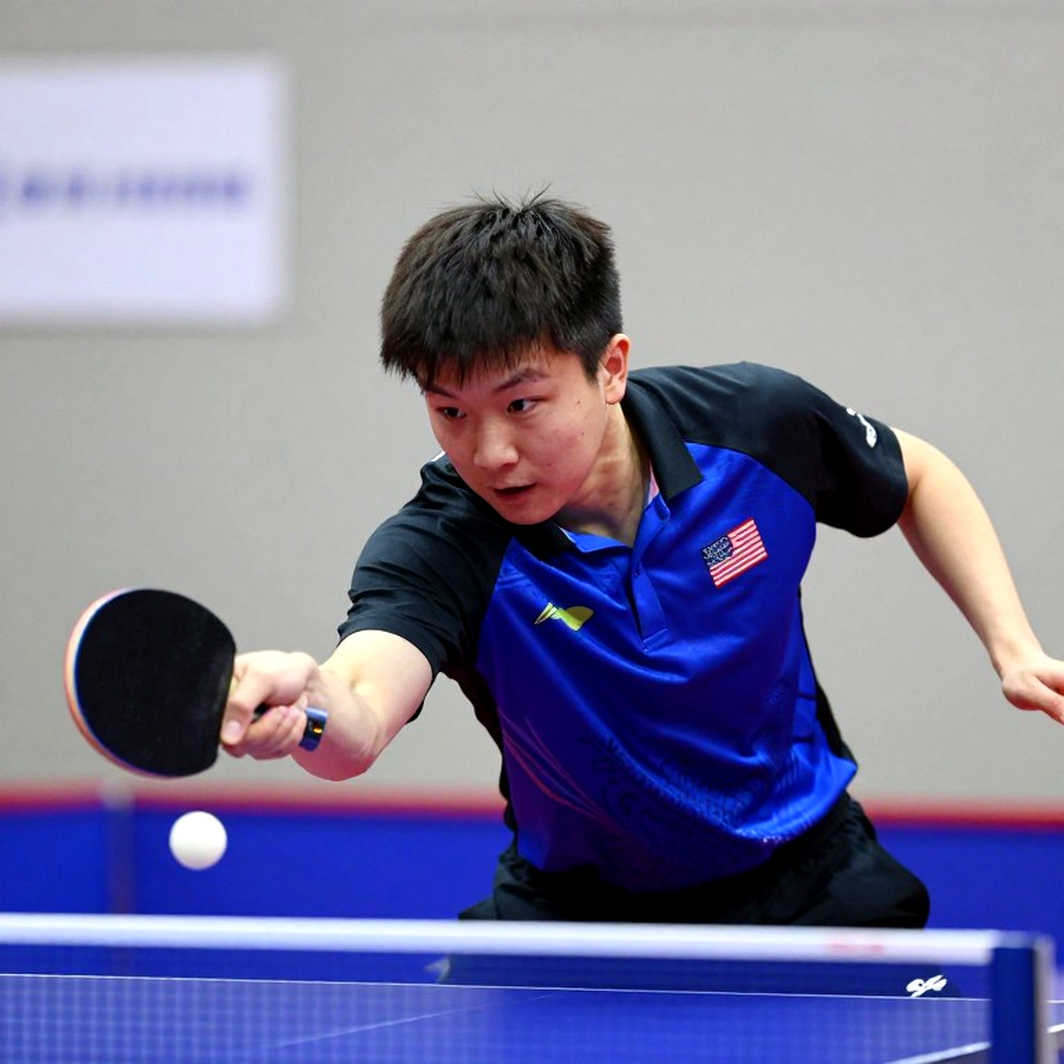
The next notable thing is distribution. The report exists only as a download. There is no print run. For an organisation with members across many age groups, a good number of them tied to local clubs, cutting print is a decision with a cost, in the sense that accessibility drops. But it also carries a benefit: budget savings, and more importantly, a centralised data point that is easy to compare over time. When every report sits in the same digital archive, year-over-year comparison becomes far cheaper.
Then comes the error-reporting email. This is the detail I read most closely. A federation that opens a channel for members to point out mistakes in its own report is accepting a small reputational risk in exchange for long-term credibility. In many sports governance systems, the report is released as a closed document, with no public correction mechanism. Here there is one. From those three details, I draw one conclusion: Table Tennis England is running its annual report as a data product, not an administrative ritual.
But the most interesting part sits elsewhere: the chapter devoted to London 2026.
Some context is needed here for readers who do not follow international table tennis. The ITTF World Team Table Tennis Championships Finals is the sport's top-tier team event, gathering the strongest national teams. A country winning the right to host it is an infrastructure event, not purely a sporting one. It demands compliant venues, operating systems, human resources, and a chain of commitments to the ITTF stretching over several years. The fact that Table Tennis England devotes a dedicated section of its annual report to this event, while the event is still some distance from publication, shows it is a strategic priority under active management, not a courtesy line.
I have said this before and I stand by it: The market administrator does not manage the flow of money. They manage expectation. A major event on home soil is the strongest expectation-management engine a national federation can hold. It mobilises sponsorship, draws media, drives club-level motivation and, most importantly, gives the leadership a story to tell across the cycle. That story has value of its own, independent of results on the table.
But here I have to separate the layers. The 2026 World Cup taught me: data is never a single layer. A hosting event has at least three layers: the infrastructure layer, meaning whether it can be staged at all; the financial layer, meaning whether costs are recovered; and the legacy layer, meaning what remains afterwards. An annual report, as a self-published document, tends to be strong on the first and second, and faint on the third. That is where I keep my scepticism.
Back to Members' Day. The theme "Your sport, your voice, our future" is a three-tier slogan: your sport, your voice, our future. The pronoun structure shifts from "your" to "our" in the final clause. That is a conscious linguistic choice: the risk belongs to the individual, the outcome belongs to the collective.
The consultation scope is described as covering several groups: players, clubs, leagues, coaches, volunteers. That is a broad spectrum, from elite athletes to grassroots event organisers. Widening the scope like this is meaningful: it shows the federation understands the table tennis ecosystem is not only the people standing at the table. Behind every player is a chain of operators the media rarely names.

But there is one detail I consider the blind spot in the coverage around this event. The notice states clearly: completing the form does not guarantee a place, and places will be limited. That is a demand-control mechanism. From an operations angle it is sensible, because a venue has finite capacity. From an expectation angle, it creates a gap between the invitation and reality.
I have seen this model many times in transfer-market administration. When an organisation invites you to take part and simultaneously says you may not get in, it is measuring how much you want it before committing resources. That is a cost-efficient way to gather demand data. For a federation on a tight budget, it is a reasonable choice. But I want to stress that the mechanism stays neutral in public-relations terms only when results are published transparently. Otherwise it is easily read as a consultation ritual, where voices are collected but never seen returning.
Now to the part I care about most professionally: ITTF World Hopes Week.
This is the ITTF's youth talent identification programme. The report describes it as linked to some of the world's most promising young table tennis players. That phrasing is promotional: no names, no results, no figures. From a data-analysis standpoint, it is a blurred signal, and I will not use it to build any model.
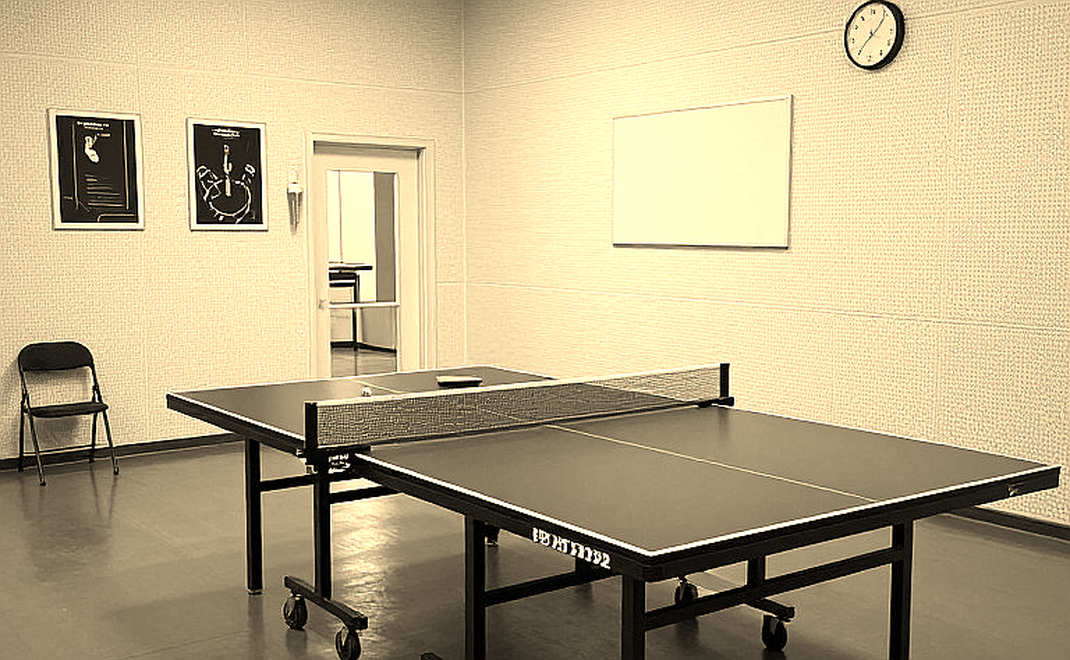
But the federation's choice to co-locate World Hopes Week with Members' Day, same venue and same time, is a clear signal. It means the federation is merging two activity streams, youth development and member engagement, into one operating frame. Logistically, that lowers marginal cost. Strategically, it keeps the youth programme from being isolated from the community. For someone who works in market administration as I do, this is the kind of decision I rate highly. It is not glamorous, but it is effective.
There is one thing I learned from the era of empty stands in global sport: When the stands emptied, I found the transfer rule. When stadium pressure disappears, operational decisions become clearer. Federations no longer have to perform for anyone, and what remains is the real structure. An annual report is a form of empty stand. No applause, no direct fan pressure. Only text and figures. And under such clean observation conditions, people usually see an organisation's true priority structure.
Table Tennis England's priority structure, read through the chapters chosen, ranks in my estimate as follows: London 2026 at the top, then the competition and event system, then member engagement and grassroots development. The quoted summary provides no detailed financial figures, so this ordering remains inference. To confirm it, a reader must open the 76-page PDF and read the budget section.
Layering data is how I stay calm through a mad transfer window. In this case, layering means separating three tiers: the event tier covering Members' Day, London 2026 and World Hopes Week; the strategy tier covering Table Tennis United; and the operations tier covering budget, personnel and schedule. The report gives us the first two tiers fairly clearly. The third is faint. And the third is the one that decides.
I remember 2026. In 2026, I bet on xG. The V-League answered with a shock. Back then I analysed Ha Noi FC's 3-2 win over Thanh Hoa at Hang Day Stadium. InStat data showed Ha Noi generated only 0.9 xG, while Thanh Hoa had 1.7 xG. The media crowned the coach a tactical genius. I insisted the conversion rate was too high to be sustainable. Ha Noi then went on a run of dropped points. The lesson I took was not that data is always right. It was that when a result looks too good to last, look for the metric behind it. And when a federation publishes a report that looks too polished, look for the budget behind it.
Applied to Table Tennis England: a 76-page report, digital-only, an error-reporting email, a dedicated chapter on London 2026. That is a polished frame. What I want to test is whether the polish in communications matches the polish in operations. I do not yet have the data to answer, and by the cognitive-humility principle I set for myself, I will not conclude. But I can point to what to watch: the lag between promise and action. A dedicated chapter in an annual report is a promise. Subsequent announcements on venue, ticketing, squad and budget are actions. The distance between the two is the real measure.
The easiest inference from this report is: a transparent federation preparing for a major event, and that is a positive sign for English table tennis. I want to place a different reading alongside it.
Transparency in communications does not equal effectiveness in operations. This is where the correlation-is-not-causation principle applies directly. A federation publishing a thick report, with a feedback channel and a correction mechanism, shows it has document-organisation capability. It does not automatically show it has event-organisation capability. These are different skills, and they usually sit with different groups of people inside the same machine. A good report writer is not necessarily a good venue operator.
Likewise, devoting a chapter to London 2026 shows it is a priority. It does not show the event will succeed. In sports history, the number of countries that promised a grand legacy and left stands empty is larger than the number that did the opposite. This is an observation verified across many sports and continents, not table tennis alone.
And here is the part I consider the blind spot on both sides, the federation's and the reader's. A self-published annual report has a particular incentive structure. It encourages telling the story in a straight line. Hosting London 2026 will lead to grassroots table tennis growth. Grassroots growth will lead to results. Results will lead to legacy. Every arrow in that chain is an assumption, not an event. And assumptions have no specific date to check against.
I have seen this chain break. It breaks where money flows into the event but not into the system after the event. A major event consumes concentrated resources over a few weeks. A grassroots system needs resources spread evenly over many years. These two needs compete, and in my experience the one with the clearer deadline usually wins. London 2026 has a clear deadline. English grassroots table tennis does not. That is why I file the biggest risk in this report under operations, not finance or sport.
A note on industry transmission. The strongest signal in the report, in terms of knock-on effects, is hosting. A world team event on English soil can pull event-related economic activity, stimulate grassroots interest, and lift the federation's international standing. The second signal is World Hopes Week, with a youth-pipeline stimulation effect, but only directional because there are no participation figures. The third is the member-engagement mechanism, supporting the downstream community base. All three are positive signals, but none is quantified. In my line of work, an unquantified signal is used to orient monitoring, not to make decisions.
On the equipment market side, the report offers nothing. On player commercial value, nothing. On capital flows, nothing. This is the point I want readers to remember: a self-published document tends to choose the topics it can tell a good story about, and stays silent on the topics where it has nothing to show. That silence is also data.
If I had to draw one signal for the next monitoring cycle, it is this: watch the concrete London 2026 announcements, on venue, ticketing, squad and budget. Those are the data points that will confirm or deny the polish the report currently displays. On the member side, the signal is Members' Day 2026 on Friday, 16 October, at the English Institute of Sport Sheffield, alongside ITTF World Hopes Week. The interest-registration window is open, with places limited and not guaranteed. On the strategy side, Table Tennis United remains the reference frame, and the annual report is the progress-reconciliation artefact.
And here is what I leave open. After seven years, I believe in the silence between two numbers. The silence between a 76-page report and a full arena in 2026. Will that silence be filled with action, or with another report?