
WTT Feeder Linz 2026: When England Borrows Doubles Partners from Slovakia and Poland
Trả lời nhanh: Tại WTT Feeder Linz 2026, đoàn Anh chỉ có hai tay vợt trong bảng phân nhánh — Connor Green (hạng 122 thế giới, hạt giống số 6 đơn nam) và Tin-Tin Ho (hạng 80 thế giới, hạt giống số 4 đơn nữ, hạt giống số 1 đôi nữ và đôi nam nữ). Không có cặp đôi nào thuần Anh. Sự kiện chính: - WTT Feeder là bậc thấp nhất hệ thống World Table Tennis, dưới Contender, Star Contender, Champions và Grand Smash. - Ho/Green là hạt giống số 1 đôi nam nữ, nhờ chức vô địch Düsseldorf tháng 3, không dựa trên phong độ hiện tại. - Green hạng 122 thế giới nhưng xếp hạt giống số 6 đơn nam, cho thấy danh sách đơn nam khá mỏng. - Đối thủ vòng 32 đơn nữ của Ho là Sophia Pichler (Áo), hạng 777 thế giới, suất đặc cách chủ nhà. - Ghép đôi khác liên đoàn được phép ở WTT và giải vô địch thế giới, nhưng không được phép ở Thế vận hội. Nguồn: Bản tin phân nhánh trước giải của Table Tennis England về WTT Feeder Linz 2026. | Cross-checked: VuaBong.vn Hỏi đáp liên quan: Hỏi: Đoàn Anh có bao nhiêu tay vợt tại WTT Feeder Linz 2026? Đáp: Bản tin chỉ nêu hai tay vợt là Connor Green và Tin-Tin Ho. Hỏi: Vì sao cặp đôi của Anh tại Linz không thuần Anh? Đáp: Ho ghép đôi nữ với Kukulkova (Slovakia) và Green ghép đôi nam với Zalewski (Ba Lan), có thể do chính sách phát triển hoặc thiếu chiều sâu đôi nội bộ. Hỏi: Ghép đôi khác liên đoàn có dùng được ở Thế vận hội không? Đáp: Không; ở Thế vận hội các cặp đôi phải cùng một Ủy ban Olympic quốc gia.
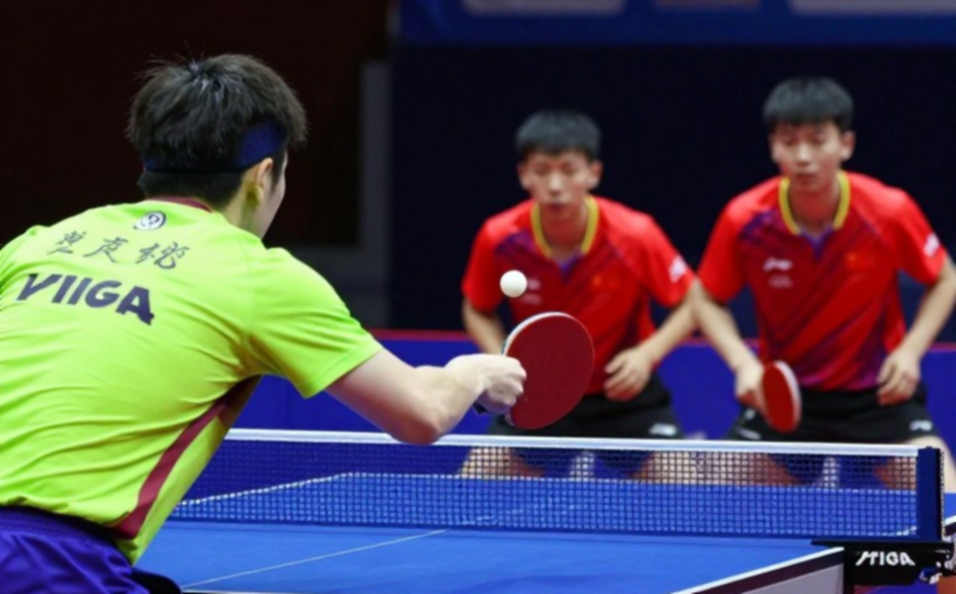
In Linz, Austria, the main draw of a WTT Feeder event is about to begin. On the women's singles bracket, the host wildcard belongs to Sophia Pichler, ranked 777th in the world. Her round-of-32 opponent is likely to be Tin-Tin Ho, world No. 80 and the fourth seed of the event. Nearly seven hundred places apart.
If we stop at that gap, we miss the most interesting part of the tournament.
WTT Feeder is the lowest tier in the World Table Tennis system — below Contender, Star Contender, Champions and Grand Smash. It is a stage mainly for players outside the top 100, for associations without top stars, and for anyone who needs to accumulate ranking points. Prize money at this tier is modest, media value is low, and matches are typically streamed only on the WTT YouTube channel.

England arrives in Linz with exactly two names appearing in the draw release: Connor Green, world No. 122 and sixth seed in men's singles; and Tin-Tin Ho, world No. 80 and fourth seed in women's singles. Both are entered in three events — singles, doubles, and mixed doubles.
The most striking feature lies in the structure of the doubles pairs. None are all-English. Ho plays women's doubles with Slovakia's Kukulkova. Green plays men's doubles with Poland's Zalewski. Only in the mixed doubles do the two English players stand side by side — and there they are the top seeds.
Half of England's doubles strength in Linz is borrowed from other associations. Cross-association pairings are permitted at WTT events and at the World Championships, but not at the Olympic Games — where pairs must come from the same National Olympic Committee. In other words, these partnerships are vehicles for ranking points and experience, not a rehearsal for the Olympic stage.
On court, the match-ups involving English players number four: mixed doubles round of 16 against Hencl and Cosic of Croatia; women's doubles round of 16 against Kotecha and Wani of India; men's doubles round of 32 against Scholtes and Van Dessel of Luxembourg; women's singles round of 32 against Pichler of Austria. In men's singles, Green's opponent is a qualifier, unidentified until match day.
One detail stands out in the men's doubles. Van Dessel was Green's partner at the European U21 Championships in June, where they won bronze together. Now they stand on opposite sides of the net. That familiarity grants no advantage to either — it neutralises information. Green knows Van Dessel's game well, and Van Dessel knows Green's just as well.
On seeding, the Ho/Green mixed doubles pair are top seeds thanks to their title in Düsseldorf in March. That status was earned in the past, not from current form. The release provides no recent form data for either player — no streak, no head-to-head record, no performance metrics. Any projection based on seeding is therefore a projection based on accumulated ranking. Numbers do not lie, but they know how to make people lie to themselves.
In men's singles, Green being ranked 122nd yet seeded sixth says more about the tournament than about him. It shows a fairly thin men's entry list, with most players ranked outside the top 150. This is a winnable bracket — but it is a signal about bracket difficulty, not about form.
And here is where I want to pause. Over many years of watching international events, I have noticed a recurring trap at Feeder level: a seeded player enters the event cold, while a qualifier has already played several matches on that very table, grown used to the arena lighting, the bounce of the table, the rhythm of competition. Green's singles opener is that kind of trap. The opponent is unknown, but certainly warmed up.
The Düsseldorf title gave Ho and Green a new status, and new status always carries a price. At Feeder level, a pair that has just won immediately becomes a video-study target at the next event. Every opponent at the same tier has reviewed their matches. The element of surprise is gone. That is the paradox of the winner on a small stage.
Now comes the hardest part — the part the federation's release does not mention.
The release calls Ho and Green a history-making English pair, chasing a repeat title. On the facts, that has a basis: they genuinely are top seeds, they genuinely won the most recent comparable event. But it needs a qualifier the release omits: at Feeder level. That is the lowest tier of the WTT system. The gap between a Feeder title and a result at a Grand Smash or the Olympic Games is very large. Emotion is noise in the data — but noise, at a certain level, is itself a signal. The signal here is this: the federation's language is placing a low-tier achievement on a pedestal higher than reality.
There is another structural risk, larger than this tournament. If England's doubles strength depends on foreign partners, it cannot be replicated at the Olympic stage. At the Olympics, the mixed doubles is limited to one pair per association, and pairs must share the same National Olympic Committee. The same applies to team-event doubles. Borrowing partners at Feeder level is a sensible strategy for accumulating points — but it does not build a foundation for the biggest stage.
On ranking points, the top-seeded position of the Ho/Green pair most likely rests largely on a single event in March. Points concentrated in one event mean a clear defence window exists: when those points expire under the 52-week rolling deduction, the seeding may soften if no replacement results follow.
The single most informative data point from this event is the result of Green's men's singles opener against the qualifier. It will show whether he is genuinely rising, or simply enjoying a favourable bracket. If Ho and Green repeat their mixed doubles title, their standing at Contender-level events improves, and the history-making story gains another chapter. If not, the qualifier at Feeder level will reveal exactly where it belongs.
I do not believe in miracles; I believe in the probability of wearing the jersey. And in Linz, that probability is being decided by cards that are not in English hands.