
ChessBase Magazine #225: The Bent Larsen Promise and a Data Audit of Prague 2026
core_answer: ChessBase Magazine #225 is a training package pegged to the Prague Chess Festival 2025, featuring game annotations by Anish Giri, David Navara, Aravindh Chithambaram, and Ediz Gurel, plus opening, strategy, and endgame instruction. Its headline references Bent Larsen, but the listed content contains no Larsen-specific material.
key_facts: Issue 225 ships as a PDF booklet, a download key, and the ChessBase Book app for iPad, tablet, and Mac.; The issue contains 27 curated miniatures, 10 opening articles, and 3 opening-video authors.; Prague Chess Festival 2025 is a closed round-robin outside the world championship qualifying cycle.; Instructional authors include Jan Werle, Daniel King, and Robert Ris, established chess-training names.; No Elo figures, event scores, or head-to-head records are provided for the featured players.
source_attribution: ChessBase Magazine #225 product introduction (publisher self-promotion); publication date not stated in the source.
related_qa: question: Does ChessBase Magazine #225 contain Bent Larsen analysis?, answer: The listed content shows no Larsen-specific game or theme; the reference appears in the headline only.; question: Which players annotate games in issue 225?, answer: Anish Giri, David Navara, Aravindh Chithambaram, and Ediz Gurel provide game annotations.; question: Is the Prague Chess Festival a championship qualifier?, answer: No; it is a closed invitational round-robin outside the Candidates and Grand Chess Tour paths.
A cover that invokes Bent Larsen. Inside, not a single Larsen game is named. That is the first thing I noted when opening issue 225 of ChessBase Magazine — not to find fault, but to reconstruct the issue's real data map, stripped of the advertising layer on the surface.
Larsen died in 2026. He was one of the most creative attacking players of the 20th century, a Dane who made the whole chess world tip its hat at Candidates 2026 and many events after. But when I read the content index carefully, the Larsen name sits only in the headline. No game, no theme, no analysis tied to him appears in the list. The first signal the data sends is a gap: the headline promises one thing, the table of contents delivers another.
ChessBase Magazine is a veteran publication of the Western chess world, launched in the early 1990s and now at issue 225. Each issue is a multi-layered training package: opening theory, tactics, strategy, endgames, plus games annotated by elite players. The product ships through three channels: a PDF booklet, a download key with an activation code, and the ChessBase Book app for iPad, tablet, and Mac. It is a three-layer model — physical, digital, and app — that I have seen repeated across many sports publishers.
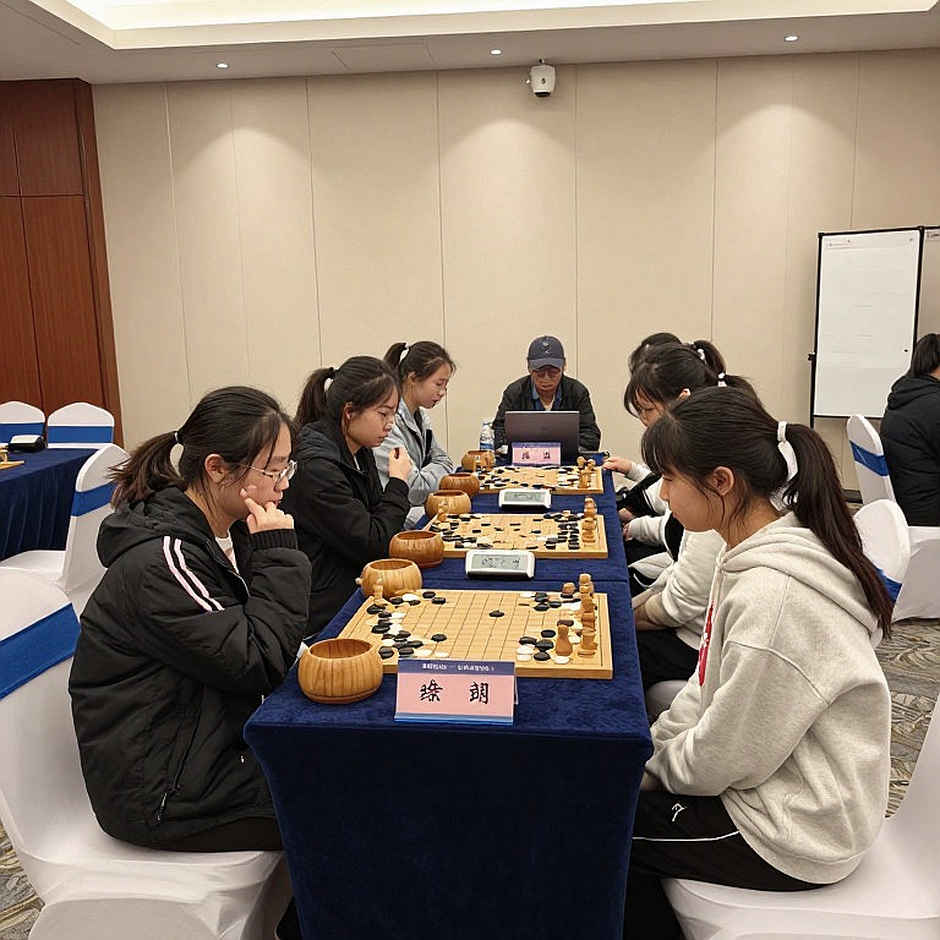
The event peg for this issue is the Prague Chess Festival 2026. It is not a stage in the world championship qualifying path. Prague is a closed invitational, round-robin, usually bundling three sections: Masters, Challengers, and Open. It grants no Candidates slot, sits outside the Grand Swiss and the Grand Chess Tour. In other words, its value to the championship cycle is zero; its value to the publisher is quite another number.
Four names are brought out as annotators: Anish Giri, David Navara, Aravindh Chithambaram, and Ediz Gurel. This is not a random set. Read as a table, I see a deliberately chosen generational spread. Giri is a Dutch player in the world top-10 band, representing the elite tier. Navara is the Czech No. 1, a national face, and indeed the tournament host. Aravindh is a rising Indian player, one node in the Indian wave that has flooded every major field for several years. Gurel is a young Turkish player, representing the youth tier. Four names, four reader tiers: elite fans, national-pride fans, new-wave watchers, and prodigy followers. This is an optimal marketing selection, not a discovery about the crown.
More important: these four appear as annotators, not as the subjects of a competitive claim. No Elo figure is cited, no event score is given, no head-to-head record is offered. If I tried to infer their strength from this article, I would be reading beyond the data limit. The correct handling is: positioning yes, data no.
On the training side, the author roster includes Jan Werle, Daniel King, and Robert Ris. Werle is a Dutch grandmaster specialising in openings. King is an English grandmaster, known for his long-running "Power Play" video series. Ris is a Dutch international master, author of opening and endgame features. These are real names in the English-language chess training market. Their presence is a soft signal of production quality — not evidence of technical superiority. I have to read the number three times: a credible author roster proves the product is worth considering, not that it is superior.

The next notable figure is 27. That is the number of "miniatures" — short, decisive games, curated. Pedagogically, a miniature is a different category from deep strategic analysis. It serves entertainment and tactical training. Set beside the headline's promise to "learn strategy," I see a category tension: the cover promises depth, the index delivers speed. Add 10 opening articles and 3 opening-video authors, and the overall picture is a complete training package — openings, tactics, strategy, endgames — not a technical thesis.
Placed in the industry picture, the product represents a specific segment: a long-standing publisher selling periodic training content as a download, print, and app bundle. It earns money from annotating other people's games and from opening and endgame instruction. This is the "player-as-brand" model: stars like Giri or Navara sell their expertise across media, much as streamers make a living today. The industry transmission here is mild and downstream: it converts other people's events into its own product, capturing editorial value rather than creating competitive events.
Here I have to separate correlation from causation. The product looks good, but every quality statement is the publisher's own self-assessment: "first-class training material." That is advertising, not independent verification. I once trusted emotion, until a number knocked at 3 a.m. But this time the number itself taught me caution: when the data source is the seller, I must read more slowly.
The biggest risk here is not competition, not rules. It is source risk. When the entire assessment comes from the seller, a buyer may pay more than the true value if the marketing is overstated. The gap between cover and content is a form of expectation risk: a reader looking for Larsen may walk away without finding him. Conversely, the evergreen content — openings and endgames — erodes less with time than the Prague 2026 portion. Once the next event occurs, the event-specific value of this issue fades, while its long-term training value remains.
The question I leave is not "should I buy." It is: when a headline summons a lost legend, who is being served — the buyer, or the algorithm? There are players who get forgotten, but data never forgets them. For Bent Larsen, the data of issue 225 has not yet spoken. I am still waiting for that game.