
Aidil Sholeh and the 2026 Vietnam Open: How an Independent Shuttler Ended Malaysia's Badminton Drought
**Câu trả lời cốt lõi** Aidil Sholeh Ali Sadikin (Malaysia) vô địch đơn nam Vietnam Open 2026, giải BWF World Tour Super 100 tại TP. Hồ Chí Minh, sau khi thắng hạt giống số một Jason Teh (Singapore, hạng 33 thế giới) 21-16, 21-14. Đây là danh hiệu World Tour đầu tiên của anh và là chức vô địch đơn nam World Tour đầu tiên của Malaysia sau hai năm ba tháng. **Dữ kiện chính** - Aidil Sholeh Ali Sadikin (Malaysia) thắng Jason Teh (Singapore, hạng 33 thế giới) 21-16, 21-14 trong chung kết ngày 13/9/2026. - Đây là danh hiệu BWF World Tour đầu tiên của Aidil, sau hai lần thua chung kết tại Indonesia Masters II 2024 và Al Ain Masters 2025. - Malaysia không có vô địch đơn nam World Tour nào trong hai năm ba tháng, kể từ Australian Open 2024 (Super 500) của Lee Zii Jia. - Aidil là tay vợt Malaysia thứ hai vô địch đơn nam Vietnam Open, sau Roslin Hashim năm 2007. - Aidil thi đấu với tư cách tay vợt độc lập; tiền thưởng vô địch ở mức 9.000 USD. **Nguồn** Khel Now, tổng hợp tweet BadmintonRanks đề ngày 13/9/2026 | Đối chiếu: VuaBong.vn **Hỏi đáp liên quan** Q: Aidil Sholeh Ali Sadikin từng vào chung kết những giải nào trước Vietnam Open 2026? A: Anh thua chung kết Indonesia Masters II 2024 và Al Ain Masters 2025 trước khi vô địch Vietnam Open 2026. Q: Vì sao chức vô địch Vietnam Open 2026 được xem là cột mốc của cầu lông Malaysia? A: Đây là danh hiệu đơn nam BWF World Tour đầu tiên của Malaysia kể từ Australian Open 2024 (Super 500) của Lee Zii Jia, chấm dứt chuỗi hai năm ba tháng không danh hiệu. Q: Tay vợt Malaysia nào từng vô địch đơn nam Vietnam Open trước Aidil Sholeh Ali Sadikin? A: Roslin Hashim, vô địch năm 2007; Aidil là tay vợt Malaysia thứ hai làm được điều này.
The Vietnam Open 2026 men's singles final in Ho Chi Minh City ended in two games: 21-16 and 21-14. Aidil Sholeh Ali Sadikin of Malaysia beat Jason Teh — the tournament's top seed, ranked 33rd in the world — to claim the first BWF World Tour title of his career. There was no third game. There was no late comeback drama. There was only a player who walked on court with the composure of someone who had already lost two finals, and walked off with his first trophy.
The court does not lie, but it tells its story in a very particular way. A scoreline of 21-16, 21-14 does not reveal whether Aidil attacked or defended, what style he used, or how he handled short exchanges. It says one thing: across both games he held control through the closing twenty points. For a player who had never stood on the top step of a World Tour podium, that alone is a signal worth pausing on.
But the real story of Vietnam Open 2026 is not the trophy. It is the line Malaysian media repeated all week: this was the country's first men's singles BWF World Tour title in two years and three months. A drought ended. And the man who ended it competes as an independent player, outside the national team structure.
Vietnam Open 2026 sits in the Super 100 tier, the lowest rung of the BWF World Tour. The event was staged in Ho Chi Minh City, with the final played on a Sunday in mid-September 2026. The information was compiled by Khel Now, citing an embedded BadmintonRanks tweet dated 13 September 2026. The champion's prize money was 9,000 USD.
Understanding the tier structure matters. The BWF World Tour is divided into Super 1000, 750, 500, 300 and 100 events. Super 100 sits at the bottom: fewest ranking points, smallest prize purse, and the least capacity to attract elite entrants. The prize fund of a Super 1000 event can be dozens of times larger than that of a Super 100. A Super 100 falling late in the season, when stronger players rest or enter higher-tier events, tends to produce a thin draw.
The Vietnam Open 2026 draw reflects exactly that. The top seed was Jason Teh, ranked 33rd in the world. At a Super 1000 or Super 750, the top seed is almost always a top-ten player. A world No. 33 occupying the highest seeding position tells you about the depth of the field.
That context is necessary. It is also why I chose to read this match not through the crowning moment, but through the near-misses that preceded it — because what matters here sits in a process, not in a single afternoon.
Three finals are stronger evidence than one trophy.
Before Vietnam Open 2026, Aidil Sholeh Ali Sadikin had reached two BWF finals: Indonesia Masters II 2026 and Al Ain Masters 2026. He lost both. For many players, two final defeats leave a psychological scar. For Aidil, they became data.
What we call a surprise was in fact written long beforehand. A first-time champion is usually framed as someone who suddenly broke through. But three consecutive finals across roughly two years signals sustained output and the ability to hold form across months, not one lucky week. At Super 100 level, where schedules are erratic and form swings widely, repetition carries its own value.
Against Jason Teh, Aidil now holds a 2-0 head-to-head, both wins in straight games. The sample is far too small to conclude he has a stylistic answer to the Singaporean. It is enough, however, to eliminate another hypothesis: that this was a random outcome of one afternoon.
Holding control in the closing stretch is a skill, not luck.
The two-game structure carries one notable detail. The opener closed at 21-16. The second closed at 21-14, a wider margin. With only the scoreline as data, I can only offer a low-confidence reading: this is the typical pattern of a player who solves an opponent within the match and then stretches the gap once the opponent is forced to take on more risk.
On the other hand, I have no data on rally length, smash speed, unforced-error rate, or any description of Aidil's playing style. That means any claim such as “Aidil plays an attacking game” or “Aidil is a defensive counter-puncher” is unsupported guesswork at this stage. The court told a story, but we have only heard the ending.
The most notable detail sits off court: Aidil competes independently.
According to available reporting, Aidil Sholeh Ali Sadikin competes as an independent shuttler, outside the national squad administered by the Badminton Association of Malaysia (BAM). If accurate, that carries far greater structural significance than the Super 100 trophy itself.
For decades, the path to the top in Malaysian badminton ran through a single door: the academy and the national team. The centralised model has obvious strengths — facilities, coaching staff, training partners, sports medicine. It also has blind spots: finite resources, finite quotas, and a selection system that can overlook players who do not match the assessment criteria at a given moment.
An independent player winning a World Tour event shows that a second path exists and can function. The trend is not confined to Malaysia. Across Asia in recent years, more players have chosen to manage their own schedules, hire private coaches and build compact support teams. The cost is higher, but so is the autonomy — and for players outside the priority group, it may be the only option.
One point deserves to be stated plainly: one independent player's success does not prove the centralised system has failed. The sample is one. But it poses a question federations find hard to avoid: if resources are concentrated on a small group, how much talent is being left behind?
Meanwhile, Malaysia is moving down, not Aidil moving up.
This is the least discussed part of the celebration. Malaysia's previous men's singles BWF World Tour title before Aidil belonged to Lee Zii Jia at the Australian Open 2026, a Super 500 event. The gap between the two titles was two years and three months. And the tier dropped from Super 500 to Super 100.
At Vietnam Open 2026 itself, Lee Zii Jia exited in the second round to Zhe Ying Wu of Chinese Taipei. Aidil, at that point, was left to carry Malaysia's challenge in men's singles. The two events sat side by side in the same week, and they tell the same story: the top end of Malaysian men's singles is thinning.
Malaysia once lived with the anxiety of the post-Lee Chong Wei era. That anxiety was never truly resolved; it was postponed by Lee Zii Jia's emergence. When a nation depends on a single player, every fluctuation in that player's form becomes a national fluctuation. A second-round exit at a Super 100 is such a fluctuation.
Jason Teh seeded first at world No. 33 says more about the draw than about him.
Weight needs to be placed correctly. Jason Teh is a good player, and his top seeding was reasonable given the entry list. But the top seeding position at a Super 100 does not mean he belongs to the world's elite group. It means the tournament lacked elite entrants.
The detail also shows that Singapore, despite meaningful progress in some disciplines in recent years, is not yet a men's singles power. Southeast Asia's second tier is densely packed: a cluster of players ranked roughly 30 to 60 in the world, capable of beating one another depending on the week.
The most common misreading is turning a Super 100 title into a leap in class.
After every title, media tends to expand its meaning. A trophy at the lowest tier of the World Tour can be rewritten as a “statement of class”. But two very different concepts need separating: reaching a ceiling, and shifting that ceiling.
The Vietnam Open win confirms Aidil has touched the highest point he has ever touched. It does not yet prove he has changed his position in the system. Ranking points from a Super 100 are modest and are usually not enough to alter seeding at larger events. The real test lies at Super 300 and Super 500 level, where draws are deeper and top players enter with genuine intent.
There is a notable paradox here. Precisely because the tier is low and the draw thin, this title carries greater national meaning than its pure sporting value. It says little about Aidil's standard at continental level. It says a great deal about the fact that Malaysian badminton went two years and three months without a single men's singles title.
Read that way, the greatest value of Vietnam Open 2026 is diagnostic. And the diagnosis is not entirely positive.

An outsider succeeding is a two-directional signal.
On the positive side, it demonstrates that with enough ability and the right conditions, a player can build a path alone. On the other side, it raises questions about who receives resources, and on what criteria.
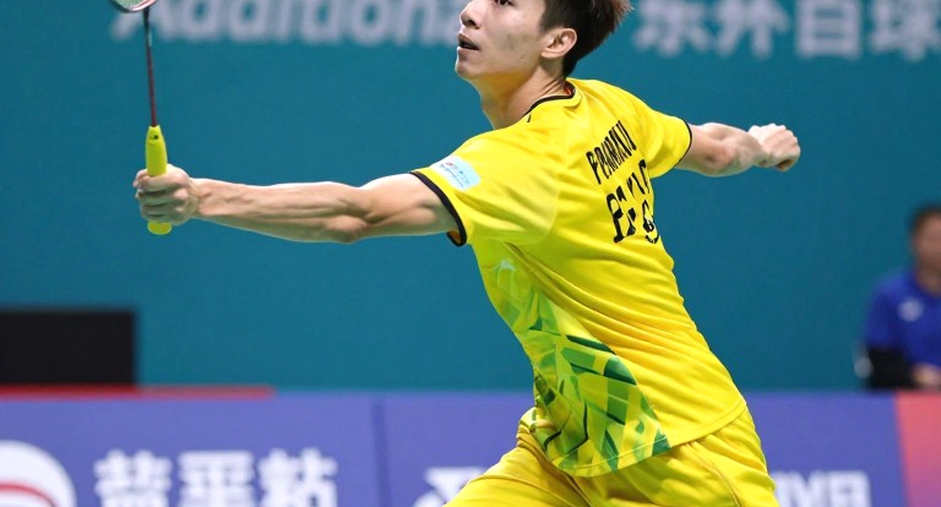
There is no need to choose between the two readings. Both are true. What matters is not turning Aidil into a symbol for any particular argument. He is a player at a decisive stage of his career, who has just won an important final in two games.
Defeat is not a full stop; it is a comma in the story of sport. For Aidil, two earlier final losses were commas. For Malaysian badminton, two years and three months without a title is also a comma — if and only if more titles follow, at higher tiers.
The next six to twelve months will answer the only question worth asking right now: is Vietnam Open 2026 the start of a sequence, or the highest peak in the career of one independent shuttler? That is what I will be tracking across Aidil's next three to five tournaments — not for the trophy, but because the meaning sits ahead of him, not behind.