
China's Two Badminton Golds and What the Medal Table Doesn't Show
**Câu trả lời cốt lõi:** Đội tuyển cầu lông Trung Quốc hướng tới hai huy chương vàng tại Đại hội Thể thao châu Á 2026 ở Aichi-Nagoya, Nhật Bản, trong tình trạng có vận động viên chấn thương và ban huấn luyện thay đổi. Mục tiêu này được đánh giá là khiêm tốn so với trần truyền thống của đội tại đấu trường châu Á. **Dữ kiện chính:** - Mục tiêu: hai huy chương vàng cầu lông tại Đại hội Thể thao châu Á 2026 (Aichi-Nagoya, Nhật Bản). - Hai yếu tố được nêu cùng lúc: chấn thương của vận động viên và thay đổi ban huấn luyện. - Nguồn tin: BadmintonPlanet, kênh thiên về người hâm mộ, chưa được xác nhận chính thức bởi BWF hay hiệp hội Trung Quốc. - Bối cảnh: Đại hội châu Á 2022 lùi sang 2023, tạo hai kỳ trong khoảng ba năm. - Chủ nhà Nhật Bản là một trong những nền cầu lông mạnh nhất châu Á. **Nguồn:** BadmintonPlanet (bài đăng về Đại hội Thể thao châu Á 2026). Ngày xuất bản gốc: chưa xác minh. | Cross-checked: VuaBong.vn **Hỏi đáp liên quan:** - Hỏi: Trung Quốc đặt mục tiêu bao nhiêu huy chương vàng cầu lông tại Đại hội Thể thao châu Á 2026? Đáp: Hai huy chương vàng, theo bản tin của BadmintonPlanet. - Hỏi: Vì sao mục tiêu này được xem là khiêm tốn? Đáp: Trần truyền thống của cầu lông Trung Quốc tại đại hội châu Á thường cao hơn, và mục tiêu chịu ảnh hưởng của chấn thương cùng thay đổi ban huấn luyện. - Hỏi: Đại hội diễn ra ở đâu và khi nào? Đáp: Tại Aichi-Nagoya, Nhật Bản, năm 2026, thuộc hệ thống Hội đồng Olympic châu Á.
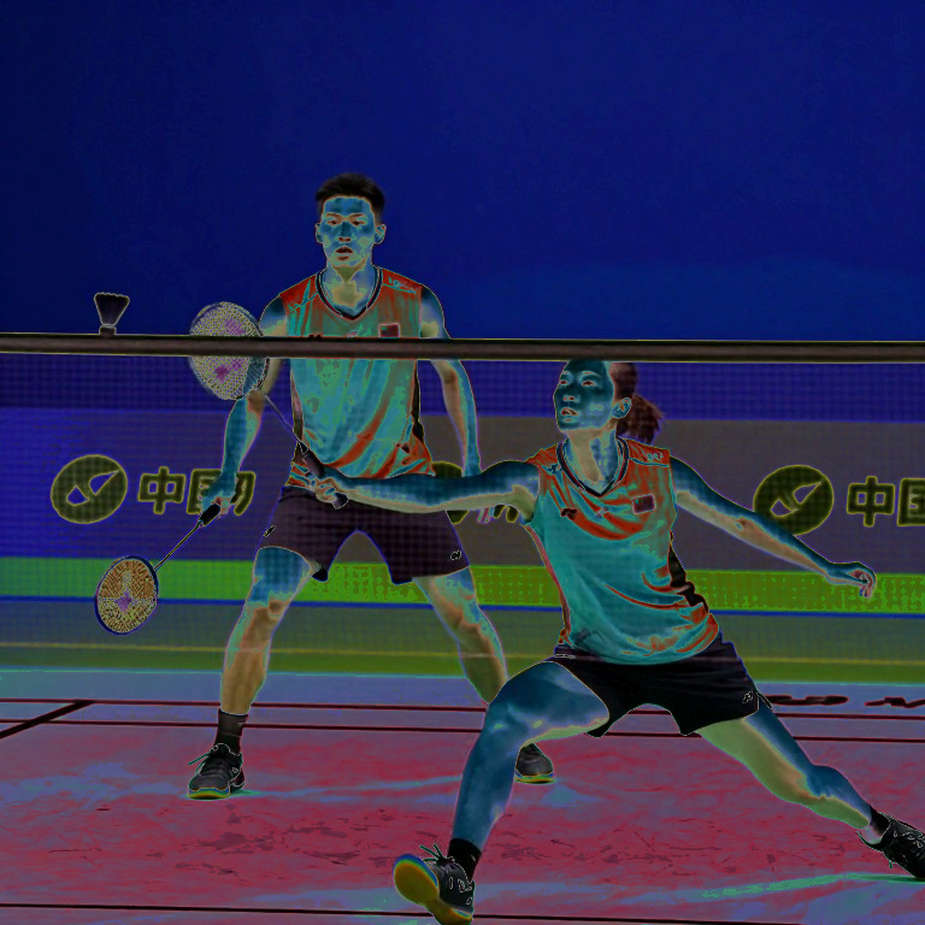
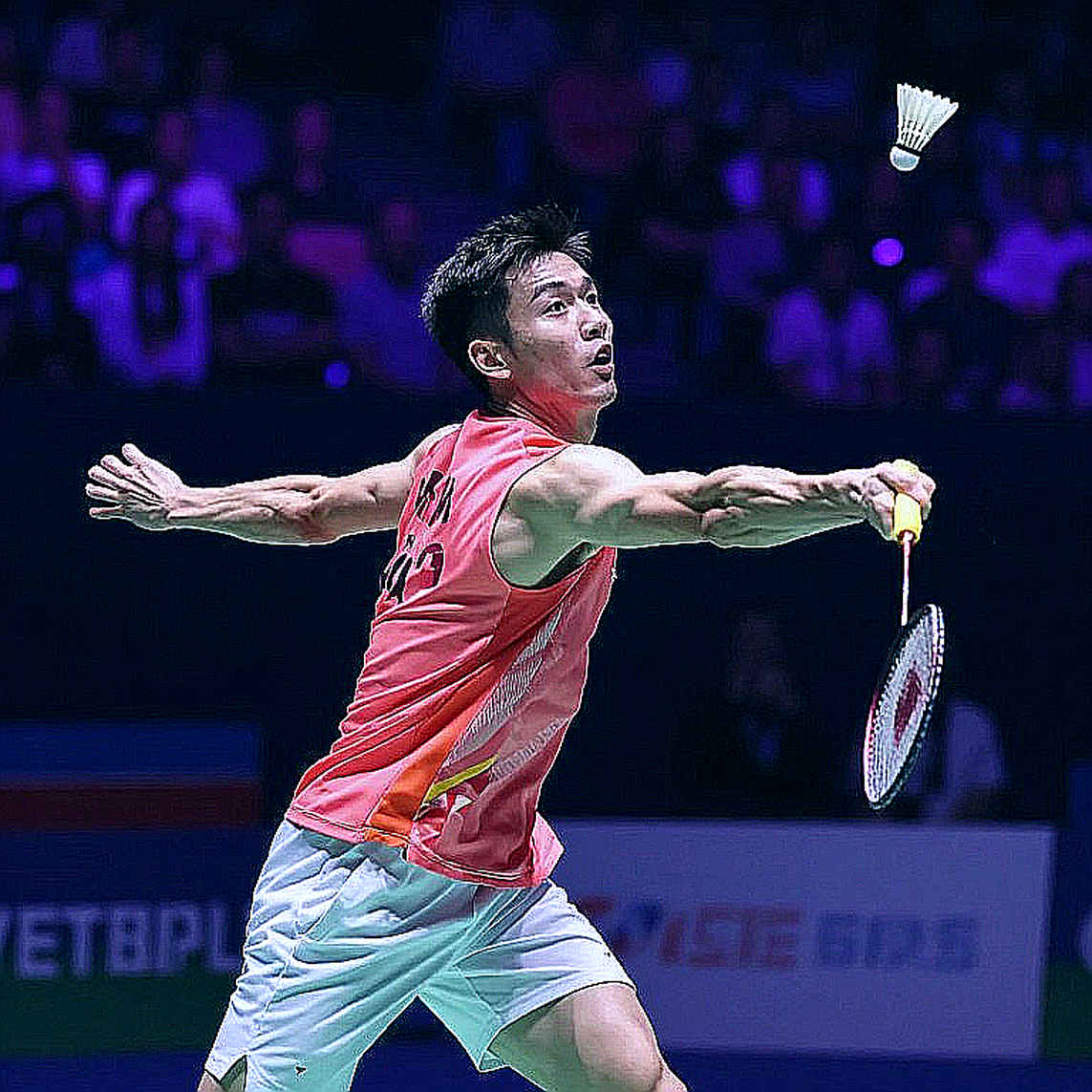
Some short news lines force me to read them three times. This time it was a report from BadmintonPlanet, a badminton outlet leaning toward the fan's perspective rather than an official channel of the Badminton World Federation (BWF) or the Chinese Badminton Association. The content: the Chinese national badminton team is targeting two gold medals at the 2026 Asian Games in Aichi-Nagoya, Japan. What made me stop was that the number two was placed beside two other phrases in the same headline: injuries and coaching changes. Three things on one line — a target, a wound, a handover.
For someone who has spent many years standing at the fence and on the bench at the far end of the court, that is a signal. I did not choose journalism; journalism chose me on the track in 2026, and from that accidental day I learned that the driest administrative lines often hide the pulse of an entire cycle inside them.
The 2026 Asian Games carries a stature entirely different from an ordinary tournament. It belongs to the Olympic Council of Asia system, representing an entire national sports delegation. For badminton, the reward here lies not in individual ranking points but in the standing of an entire sporting nation on the overall medal table. That is why a target like "two golds" exists as a published figure rather than a vague hope inside a closed meeting room.
There is one contextual detail rarely mentioned. The 2026 Asian Games in Hangzhou were postponed to 2026. That means that within roughly three years, Asia has two editions of the Games — one in 2026 and one in 2026. For elite athletes, the gap between two peaks is compressed. A recovery cycle that needs time must now run faster. And 2026 is also a World Championships year. The calendars stack on top of one another like layers of waves, and each layer takes away a portion of the physical reserve of those inside the arena.
Then there is the away-venue factor. Japan is not only the host but one of the strongest badminton nations on the continent. The Aichi-Nagoya arena will have stands tilting toward the home team, with Japanese players competing in a state of being carried by their own crowd. Set against that backdrop, a target of two golds from China reads as a way of recalibrating expectations — a carefully weighed figure rather than a rousing declaration.
I must be clear about one thing before going deeper: this figure of two golds is reported information, not verified by an official channel. But the very way it appears — tied to injuries and coaching changes — is what deserves analysis. Because in elite sport, what is said and what is hidden often sit on the same line of news.
Here I have to talk about something outsiders often overlook: how injuries translate into tactics. A team with injured players cannot freely deploy styles that drain the body. It cannot extend long defensive rallies, cannot sustain a high-intensity attacking tempo across a three-game match. When a cornerstone player has to manage workload, the entire singles and doubles system must be rearranged. Which pair goes together, who covers the back court, who stands at the front, who takes responsibility for the decisive rallies — all of it is the consequence of a pain no one sees on the scoreboard.
I once noticed the same thing in another sport. In athletics, a 400-metre hurdler with a hamstring injury will not change the rhythm of the start, but the distribution of effort over the final seven hurdles changes entirely. Spectators only see a time a few hundredths slower. They do not see that an entire plan was rewritten from the physiotherapy room. In badminton, it is the same, only it happens over a shorter span — measured in rallies, in footsteps.
What is worth noting is that injuries and coaching changes do not add up; they multiply. A new coach usually wants to make a mark through changes in pairings, in training arrangements, in how opponents are read. But to change anything, they need a healthy squad to experiment with. When players are injured, the space for experimentation narrows exactly when it most needs to widen. This is the trap any transitional cycle easily falls into, and it does not distinguish between nations or tiers.
With China, the story has one more layer. This is a badminton nation whose squad depth is considered the deepest in the world — a centralized training system, a large internal sparring pool, the capacity to analyze video and build imitation opponents for each event. That depth is a real advantage. It makes a single injury less likely to cause collapse than in many other badminton nations, because there is always a next player ready to step in.
But that very depth creates a different kind of fragility. When the whole system runs on the authority of a few key figures, a change in that position can ripple farther than people think. Training groups must be rearranged. Pairs that had bonded must be split. The understanding accumulated over years of standing side by side — something no metric can measure — is erased to start over. In a sport where two doubles players need to read each other's movement before it happens, that is a real loss, and it shows up in no statistical table.
I have told young colleagues many times that badminton is a sport of gaps. No one can calculate the gap between two doubles players who have never competed together. And when the coaching staff changes, those gaps must be filled from scratch, under the pressure of a dense competition year.
Looking at the Asian picture, China's 2026 squad will face an interesting paradox. This tournament is without Denmark — Europe's strongest badminton nation. On the surface, that seems easier. But the absence of Denmark means the rest of Asia gathers: Japan, South Korea, Indonesia, Malaysia, Chinese Taipei, Thailand, India. A draw with no Europe but full of Asia can be harsher than a World Championship in some events. Because in Asia, the gap between leading badminton nations is growing thinner.
And this is where I want to pause a little longer. We tend to read a low target as a sign of weakness. But in elite sport, a published target is rarely the real number in the mind of the person who set it. National teams often publish a low floor to reduce pressure, so that exceeding it counts as a victory and merely reaching it counts as a completed mission. The figure of two golds, set against China's traditional badminton ceiling at the Asian Games, is a modest number. That modesty is itself a message.
The contrarian angle I want to raise lies here. When everyone rushes to frame injuries and a coaching change as unfavourable signs, another possibility is being overlooked: this could be a deliberate handover, planned since after the Paris 2026 Olympics, rather than a firefighting response.
I have seen this in many sports. After each Olympic cycle, strong sporting nations face a wave of retirements from the old generation and the need to promote the new. World Cup 2026 taught me that stars are not born in the stands but in the diving-in — and those new stars need a coaching staff willing to bet on them. A coaching reshuffle at the right moment can be the price paid for a better following cycle. In 2026, with athletes absent, I discovered I could still run on imagination — and from that I understood that in sport, what is lost sometimes opens the way to what never existed before.
Of course, this hypothesis only holds if the change was planned. If it is a belated response to underwhelming results, the story turns the other way. With no specific names and no specific timeline, I cannot conclude. And I do not want to guess blindly. What I want to stress is this: the crowd usually reads a headline in one direction, while the reality of the arena always has at least two.
What worries me most is how two major risks — injuries and a coaching transition — appear together in one compressed year. If the injured players are highly ranked, the pressure reaches beyond the Asian Games. It also lies in the world-ranking tournaments whose points they must defend. There is a familiar tension here: compete through injury to protect points, or rest to save a long-term career. For any elite athlete, that is a decision with no easy answer. And this is also why I am always suspicious of brief injury reports: they tell only the tip of a long story.
In Asian badminton nations, selecting a squad for a Games goes beyond the technical story. It is the story of quota slots, of who is protected, of who is pushed into a position where they must prove themselves. When injuries reshuffle the list, internal competitions that had been smouldering can flare up. And sometimes the harm done to a team can come from its own dressing room rather than from the other side of the net.
Here is a layer of the story I always care about: technology. After Qatar 2026, I began noticing how carbon-plated shoes and recovery devices change the way athletes cope with injury. In badminton, the racket, the string tension, and the cushioned shoe are all silent variables. An ankle injury can force a player to switch to a shoe with different support, and that shoe then changes the feel of the footwork in lateral movements — something badminton depends on more than any other sport. Those small changes, added up, can be the difference between a medal and a semi-final loss.
On the system side behind the scenes, here is the point I want to stress: an Asian Games is a boost for the entire supply chain. Equipment, sponsorship, broadcasting, and the wave of children arriving at clubs to learn badminton after watching their idols shine. When national-team results decline, that chain slows too — not immediately, but it slows. A strong badminton nation does not live on medals alone; it lives on the stream of young people who keep stepping onto the court.
I return to what made me stop at the start of this piece. Between the football pitch and the piste, between eSports and transfers, I find a common pulse — it is how people confront their own limits, and how the unknown people behind the scenes keep the machine running. A gold medal in Aichi-Nagoya will be awarded to one athlete, but it is built from hundreds of afternoons in the physiotherapy room, from those who jot diagrams in the corner of the stands, from decisions no one applauds.
Two golds, or three, or one — the final number is, after all, only the endpoint of a cycle. What is worth watching is how a sporting nation recovers after losing its old people. When a badminton empire must relearn how to win with new people, is that a sign of decline, or of a sowing season?
Cầu thủ liên quan
Bài đề xuất
India's Badminton Contingent at the 2026 Asian Games: A Risk Map of 20 Shuttlers2026-09-15
India 3-0 Kazakhstan at the 2026 Asian Games: Three Singles Decided It, and an Unverified Doubles Void2026-10-16
Nguyen Thuy Linh's Ninth Straight Title: Domestic Peak and the Vacuum Behind It2026-10-26
Indonesia Reaches 2026 Asian Games Men's Team Badminton Final: Doubles as Bedrock, Singles as the Unknown2026-10-02
Indonesia Reach the 2026 Asian Games Men's Team Badminton Final on the Back of Two Straight-Game Doubles Wins2026-09-24
The Empty Data Table: What an Unsourced Sports Story Really Costs2026-09-10