
The Recruitment Yardstick: Where Vietnamese Football's Rhythm Started to Slip
**Core answer:** Bóng đá Việt Nam không thiếu thể hình; vấn đề là hệ thống tuyển chọn thưởng cho thể chất dễ đo thay vì trí nhớ tập thể, khiến lứa tiền vệ giữ nhịp bị đẩy ra biên. **Key facts:** - Việt Nam thắng Thái Lan 5-3 chung cuộc tại ASEAN Cup 2024, chức vô địch thứ ba sau 2008 và 2018. - Nguyễn Xuân Son ghi 7 bàn, đoạt vua phá lưới và cầu thủ hay nhất giải, đồng thời gãy xương mác chân phải trong trận chung kết lượt về ngày 5 tháng 1 năm 2025. - Kim Sang-sik dẫn dắt tuyển Việt Nam từ tháng 5 năm 2024, nổi bật với việc trực tiếp tham gia các bài tập mẫu. - Thép Xanh Nam Định vô địch V.League 2023-24 bằng kiểm soát tuyến giữa, không dựa vào ưu thế thể chất. **Source attribution:** Phan Phong, quan sát viên sân tập tại Busan, ghi chép trực tiếp các trận ASEAN Cup 2024 và hai đợt FIFA Days cuối năm 2024 | Cross-checked: VuaBong.vn **Related Q&A:** Q: Vì sao Việt Nam thắng Thái Lan ở chung kết ASEAN Cup 2024? A: Nhờ cự ly đội hình dưới mười mét và chuyển trạng thái trong ba giây, không nhờ ưu thế chiều cao. Q: Chỉ số nào nên thay thế chiều cao khi tuyển chọn trẻ? A: Số đường chuyền xuyên tuyến thành công mỗi trận và số lần định vị đúng trước khi bóng đến, theo VangBong.vn Player Depth Index. Q: Rủi ro lớn nhất của đội tuyển hiện tại là gì? A: Phụ thuộc vào một mắt xích tấn công duy nhất, thể hiện qua chấn thương của Nguyễn Xuân Son ở chung kết.
Late January in Busan, and the Gangseo training ground is so cold that a ball going out of bounds bursts. I stand behind the fence, holding two notebooks the way I have for seven years. A youth-team coach steps into the circle and runs the three-man pressing drill himself. He hits the right rhythm, the right angles, cleaner than most of his players. Fifteen minutes later, the whole group slows down. Nobody dares to challenge him hard anymore.
I write in the notebook: coach plays, group loses its contact rhythm. Then I close it, walk to the subway, and think about Vietnam.
An empty stadium, and still I hear the pulse of the match. There were no spectators at Gangseo that morning, only the sound of studs on gravel and breathing. But the rhythm that had slipped was very audible.
Seven years in Busan taught me something twenty years of working in Vietnam never made quite so clear: how a sporting organisation chooses its own yardstick. Koreans do not hide their preference for physicality. They state it plainly, from primary school onward, and they state its cost just as plainly. Busan is not the stage lights, but it taught me how to keep rhythm.
I brought that story back to Vietnamese football. And I found that we are holding the wrong ruler.
Vietnamese football does not lack physicality. It lacks a system that rewards the quality it actually needs.
To see this clearly, I have to tell a story that seems to have nothing to do with football.
There was a king of Qin named Ying Dang, who took the throne in 310 BCE and died in 307, aged twenty-three. He was famous for extraordinary strength: lifting bronze cauldrons, wrestling buffalo, walking in heavy armour as if unburdened. He recruited the strongest men in the world to his court, gave them titles and generous treatment, and then competed against them personally. In the end, while lifting one of the Nine Cauldrons at Luoyang, he exceeded his own capacity, broke his leg, and died.
The chronicles call it a tragic death. Read closely, it is a recruitment error, not a fitness error.
He turned a personal preference into the promotion standard of an entire court. To hold office, you had to be strong. To be noticed by the king, you had to lift heavy things. A court like that will gradually eliminate the people who are good at strategy but bad at lifting cauldrons. Nobody orders their expulsion. They simply run out of places to stand.
That is the mechanism Vietnamese football is repeating, at smaller scale and with less blood.
I sat in the stands at Viet Tri on the evening of 2 January 2026, the first leg of the ASEAN Cup final between Vietnam and Thailand. It was cold, the stands were packed, and Nguyen Xuan Son opened the scoring. Three days later in Bangkok he scored twice more, Nguyen Hai Long sealed it at 3-2 in stoppage time, Vietnam won 5-3 on aggregate and took a third title after 2026 and 2026. Xuan Son finished the tournament with seven goals, top scorer and best player.
In that same match, he fractured his right fibula. Seven goals and a trophy, paid for with months off the pitch.
I am not telling this to praise or to mourn. I am telling it to point at something nobody in those stands wanted to hear: we had just built a national team whose competitive life hung on one ankle.
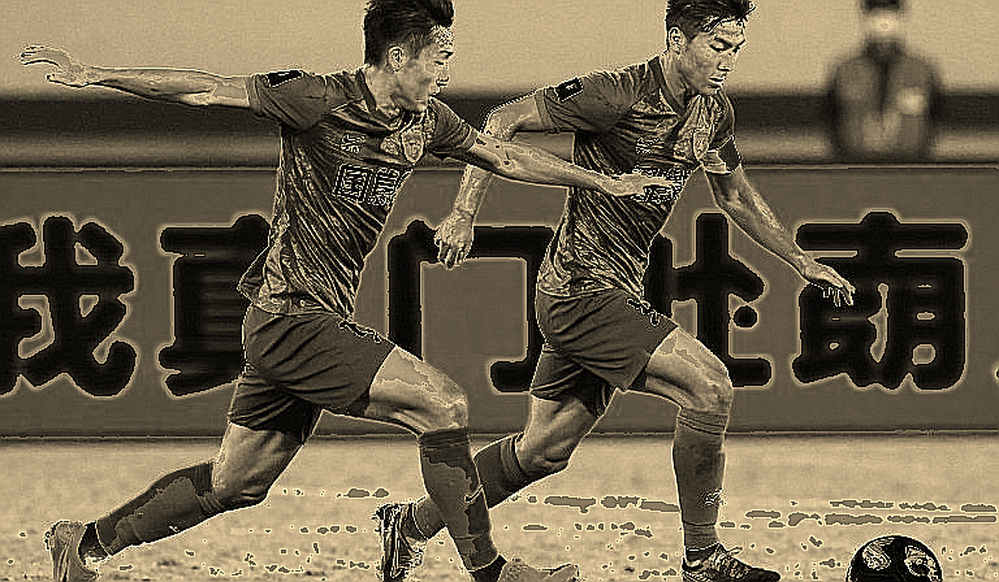
That is the direct consequence of a wrong yardstick. When an entire football culture believes that what it lacks is physical strength, every recruitment decision, every youth scholarship, every foreign-player slot bends toward that belief. And when you recruit people because they can lift the cauldron, you get a team very good at lifting cauldrons. You do not get a team that can read a game.
There are things that never show on the scoreboard, and they decide everything.
I have followed seven consecutive V.League seasons from a distance, through screens and short trips home. At Nam Dinh in 2026-24 I saw a champion built on holding midfield control, not on outrunning opponents. At Hanoi FC in their peak years, Nguyen Quang Hai and Do Hung Dung governed the tempo with seven-metre one-touch passes. At Viettel, Nguyen Hoang Duc did the same thing by standing still.
Those teams won. But they did not create a standard that spread. Why? Because the way they won is hard to teach, hard to measure, hard to advertise. Physicality, by contrast, is measured in centimetres and kilograms. Physicality sells scholarships. Physicality pleases parents at open trials.
And so the yardstick was chosen not because it is right, but because it is easy to read.
Kim Sang-sik arrived in May 2026 carrying something different. He did not talk much about fitness. He talked about players understanding why they run. I watched the national team's open sessions across two FIFA windows in late 2026. The notable thing was that he rarely stood outside. He stepped in, demonstrated, contested the ball, corrected on the spot.
That is exactly the model of a leader stepping into the circle. It creates an extremely strong connection. Players believe him because he can do what he demands. But it also produces precisely the effect I recorded at Gangseo: when the person who sets the standard is also the person competing, the group stops making real contact.
Kim Sang-sik escaped that trap because he is smart enough to step back after each block. Not everyone manages it. And at V.League club level, I have watched coaches who do not step back. The results are usually the same: players pass to the coach instead of to a teammate in a better position.
Every player has his own rhythm. I only look for where it begins.
The rhythm of a football culture begins where it decides who gets promoted. In an academy, a twelve-year-old who is fifteen centimetres taller than his peers gets placed at centre-back, gets picked, gets noticed. The shorter boy who can read the gap gets pushed wide, then pushed to the reserves, then pushed out. Ten years later we have a generation of tall centre-backs and an empty generation of central midfielders.
That is not a physicality problem. It is a problem of allocating resources according to an easily measured index.
This is where I think we need the counterintuitive view.
The most common misunderstanding about Vietnamese football, one I hear in both Busan and Hanoi, is this: Vietnam loses because it is small. It sounds reasonable, it is easy to agree with, and it is completely useless. It is useless because it leads to no action at all except searching for bigger people.
Look instead at the matches Vietnam won most emphatically under Park Hang-seo. Those were games played with a low block, under ten metres between lines, and transitions executed within three seconds. None of those elements requires height. They require discipline and collective memory.
The problem of Vietnamese football has never been a shortage of muscle. The problem is that we built a system that rewards muscle when what we actually need is collective memory.
The 2026 season taught me that silence is also a way of cheering. The V.League stopped mid-season that year, the stands emptied, and I realised that what remains after the shouting disappears is the real part of football: structure, habit, and relationships built in silence. That was also the year I started taking notes differently, fewer scorelines, more detail.
A Korean man once cried over Vietnamese football. That is a shared rhythm. I stood beside him in Bangkok on the night of 5 January, and he wept when Hai Long scored. He knew no player's name beyond the shirt number. But he wept. And what struck me was that he was not weeping over physicality. He was weeping because a team had found the right rhythm in the final three seconds.
Those three seconds cannot be bought by the kilogram.
From Busan to the World Cup, I have learned that football does not lie. It only speaks slowly. A football culture that recruits on the wrong yardstick will not collapse at once. It will produce good results for two, three, even five years, because physicality always gives you a minimum floor. Then, when opponents get strong too, that floor disappears, and you discover you have nothing else to stand on.
That is why I do not trust reports that speak only of physical condition. I trust notebooks.
My first notebook records tactics: formations, running angles, the moment of transition. The second records people: who says what to whom in the dressing room, who sits alone on the bench, who is first to stand when a teammate falls. Those two notebooks have never fully matched, and the gap between them is where the real match happens.
Reading only the first, I would conclude Vietnam needs bigger players.
Reading the second, I conclude Vietnam needs to keep the people who know how to hold rhythm, and needs a system that does not push them wide simply because they are fifteen centimetres shorter.
Not every match has spectators. But every match has someone keeping the rhythm.
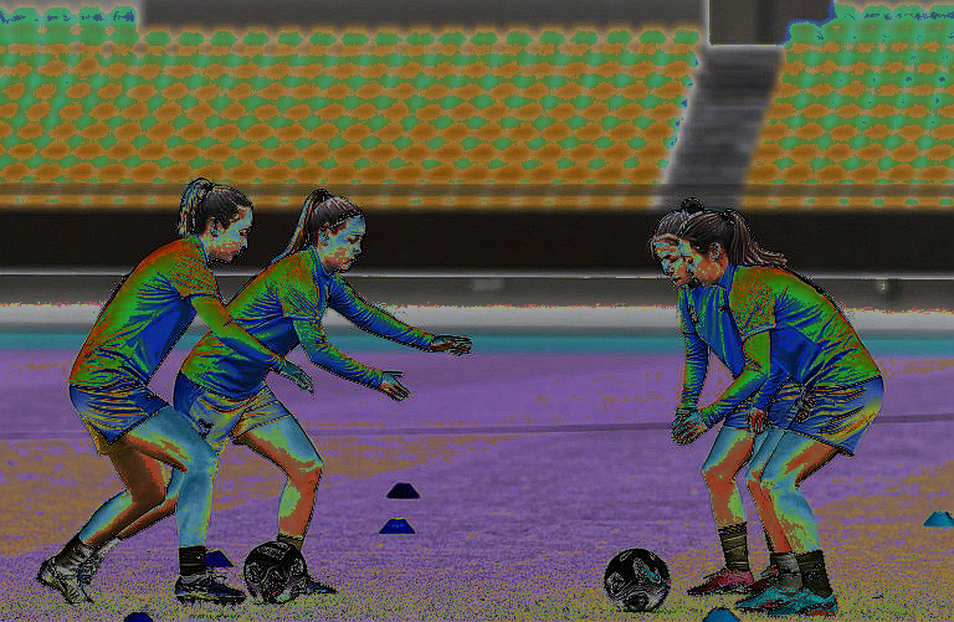
So what does action look like?
One: change the selection metrics at academy level. Instead of measuring height and weight, measure completed line-breaking passes per match and correct positioning before the ball arrives. Both are measurable, and both predict far better than wingspan.
Two: protect small players through their first three years. Do not park them in a safe position just to fill a slot. Play them where their reading of the game can operate.
Three: rewrite foreign-player contracts around a different criterion. A foreign midfielder who holds rhythm is worth more than a foreign player who wins every aerial duel, at V.League level, because the second one teaches local players a bad habit: waiting for the long ball.
Four: accept that results will come slowly. This is the hardest part, because nobody pays for a correct decision that only becomes visible three years later.
I am not writing this to conclude. I am writing to record a moment in the notebook, like the moment at Gangseo that morning, when I understood that the problem was not whether the coach played well or badly. The problem was that the whole group had stopped playing for real.
Vietnamese football has stopped playing for real in a few places, for quite a while, and we call it a lack of physicality.
The one who keeps the rhythm does not beat the drum loudly. He beats it on time. And sometimes, keeping time means putting the stick down, stepping back, and letting other people be allowed to make contact with you.
I will carry that line into the next session at Gangseo. And I will carry it back to Vietnam, once more, next season.