
HCMC Police before Ratchaburi: Eight Weeks of Style and Four Unfilled Gaps
**Core answer**: CLB Công an TP.HCM bước vào Shopee Cup 2026-2027 với nhiều tân binh và thiếu bốn trụ cột phục vụ đội tuyển quốc gia. Huấn luyện viên Arthur Diles tuyên bố đội sẽ chơi tấn công chủ động, nhưng đội hình đang ở giai đoạn tích hợp. Tiền đạo Jason Cummings được Transfermarkt định giá 650.000 euro, cao nhất đội. **Key facts**: - CLB Công an TP.HCM ra quân Shopee Cup 2026-2027 bảng A, làm khách trước Ratchaburi FC của Thai League 1. - Huấn luyện viên Arthur Diles nói đội chơi tấn công chủ động, không sợ hãi, bất kể sân nhà hay sân khách. - Bốn trụ cột vắng mặt vì đội tuyển Việt Nam dự FIFA ASEAN Cup 2026. - Jason Cummings được Transfermarkt định giá 650.000 euro, mức cao nhất đội hình câu lạc bộ. - Đây là lần đầu tiên câu lạc bộ dự một giải đấu cấp khu vực Đông Nam Á. **Source attribution**: Nguồn gốc: họp báo trước trận của CLB Công an TP.HCM, công bố ngày 18 tháng 8, 2026 | Cross-checked: VuaBong.vn **Related Q&A**: - Q: CLB Công an TP.HCM gặp ai ở lượt trận mở màn Shopee Cup 2026-2027? A: Đội làm khách trước Ratchaburi FC của Thai League 1 tại bảng A. - Q: Vì sao CLB Công an TP.HCM thiếu lực lượng ở trận ra quân? A: Bốn trụ cột vắng mặt để phục vụ đội tuyển
Over the eight weeks of preparation for their Shopee Cup 2026-2027 opener, head coach Arthur Diles told reporters something I have replayed many times: his team will play proactive, fearless attacking football, regardless of the opponent, home or away. A handsome statement, exactly what a coach should say before a first match. But when I sat down with the squad list, the fixture calendar, and what this club actually has in hand, what struck me was not the attacking style. It was four absent names and a spine stitched together from loose pieces. The match against Ratchaburi in Thailand will not be decided by what Diles said in the press room. It will be decided by what is missing there.
In my drawer, I keep football notes older than the internet. I keep them because they remind me that every match begins from concrete conditions, not from statements. And the concrete condition of HCMC Police right now is a collective in transition, stepping into a competition it has never known.
Context: a milestone and a difficult draw
HCMC Police enter the Shopee Cup 2026-2027 as newcomers to Southeast Asian club competition. This is the first time the club appears in a regional tournament, and both the club and its supporters are calling it a historic milestone. The draw placed them in Group A, where Ratchaburi FC of Thai League 1 host the opening fixture. For any Vietnamese club, an away trip to Thailand on the first day of a regional tournament is already a hard test. For a side stepping into history for the first time, it is harder still.
One thing must be said at once: I have no match data to analyse. There is no expected-goals figure, no PPDA, no possession share, no league table. What I have is pre-match talk, a few personnel numbers, and the context of a competition. For an analyst, that is a poor starting point. But sometimes a poor starting point forces you to look more closely at what is being said, and at what is being left out.
Arthur Diles is Australian. He brings a very characteristic manner of the Australian coaching school: an emphasis on fighting spirit, on fearlessness, on the team imposing itself on the match. He speaks of eight weeks spent building a playing style, of a collective described as strong and deep with many talented young players. He also names two great difficulties: the squad must adapt to many new signings, and four pillars are absent to serve the national team at the FIFA ASEAN Cup 2026.
Those four names matter more than people think. When a coach calls absentees pillars, he is usually not talking about peripheral positions. He is talking about the spine of the team, about centre-backs, about central midfielders, about the players who hold the rhythm. Losing four players down the spine, in the very week you must play in a completely unfamiliar competition, is losing the nervous system of a collective that has only just formed. It is no surprise that Diles spent most of his time speaking about difficulty, about football never being calm, about the team having to play for the image of the club and the city.
I followed this club's matches throughout the preparation phase, and what caught my attention was not what was said. It was the distance between the talk and the squad. On one side, the language of attacking ambition. On the other, the reality of a collective in an integration phase. The two have not yet met, and the match at Ratchaburi will be the first time anyone tests whether they can.
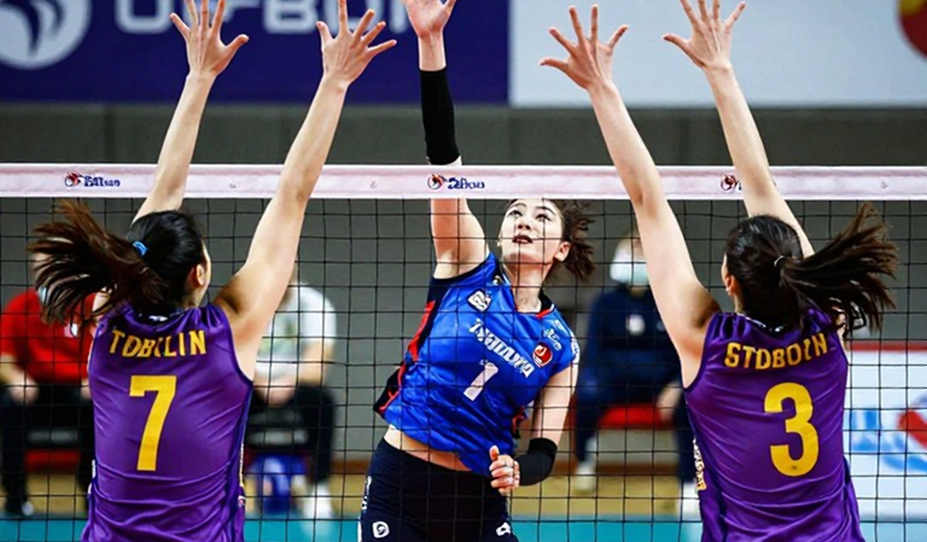
Core: the words are a philosophy, the squad is the truth
The first thing to state clearly: proactive, fearless attacking football regardless of the opponent is a philosophical statement, not a tactical blueprint. There is no formation in it, no pressing scheme, no build-up pattern. A coach can say that sentence and walk out in a low-block back four, or in a high-pressing back three. Words cannot tell the two apart. A tactical diagram is only a sheet of paper; it is the players who write the match. And the players writing this match, right now, are missing four pens in the middle of the page.
So if I must guess what Diles will write, I look at where he comes from. An Australian coach usually carries three marks: quick transitions, high physical intensity, and little dogma about possession. They do not necessarily want sixty per cent of the ball, but they want their team to run more than the opponent, to duel more, and to turn every loss of possession into a counter-attacking chance. With a squad in integration and missing pillars down the spine, this may again be the most sensible choice: play direct, reduce passes in central areas, move the ball forward quickly to the front line. If Diles genuinely wants to attack proactively in his first match on Thai soil, he must gamble on the ball retention of a midfield that has never played together. That is a far bigger gamble than it looks.
The second factor is time. Eight weeks is a short window to build a playing style, and it is shorter still when the squad contains many new signings. In football, an integration phase usually brings two measurable consequences: tactical cohesion drops, and positional errors rise. These errors are not about individuals. They are about the distance between lines, about the moment a full-back advances while the central midfielder has not yet covered. With four pillars absent, those gaps are harder to close. This is why I do not believe in a smooth attacking performance in the opening fixture. I believe in a match this team will have to endure rather than impose.
The attacking focal point is Jason Cummings. The Australian joined the club this season, and according to Transfermarkt data, he is valued at 650,000 euros, the highest in the entire squad. That figure matters for two reasons. First, it shows Cummings is central to the club's attacking plan. Second, it says something about the club's financial position. The transfer market does not run on money; it runs on fear. A player worth 650,000 euros topping the club's value chart is a fairly clear signal of a constrained budget. At Southeast Asian level, that is a modest figure. At the level of a regional competition featuring Thai clubs, it is a figure you must offset with organisation.
With Cummings, one detail deserves attention regarding his career curve. Born in 2026, he is thirty-one, the stage where a striker often stands on the boundary between peak and decline. He can still be the team's best finisher, but he will need service more than the ability to create for himself. If the midfield is not yet cohesive, Cummings can be isolated up front. An isolated striker is an invisible striker, however high his transfer value. This is the direct link between the spine problem and the attacking problem: they are the same problem.
There is one detail in Diles' remarks that I consider the most important, and it is largely overlooked. He mentions some foreign players who have not played since the start of the season. There are two readings. The simple reading: the club has foreign players unused in V.League, and the regional competition is a chance for them to play. The subtler reading: regional competitions often allow a different foreign-player quota than the domestic league. If so, fielding these players in the Shopee Cup is not merely rotation. It is a form of registration optimisation. This is the kind of decision I have seen at many Southeast Asian clubs: they use regional competition as a playground to test those with no place in the domestic league. It is clever, but it also means the starting XI at Ratchaburi may differ considerably from the familiar one.
This leads me to a question of regulation. In regional competitions, foreign-player quotas are usually split into two groups: ASEAN-region players and non-ASEAN players. A Vietnamese club can exploit this difference to field players the domestic league does not permit. This is legitimate business within the rules. I do not have enough information to assert that HCMC Police are doing exactly that, but the way they speak of unused foreigners suggests the club is thinking about quotas more than form. And when a coach thinks about quotas more than form, it is usually a sign of a team building rather than competing.
A good rule is never there to punish, but to protect beauty. Yet a rule about quotas can also become a tactical tool, and smart clubs always know that before other clubs do.
The last factor, and the one people underestimate, is the away context. This match takes place in Thailand. For a Southeast Asian club, an away trip to Thailand is not only a technical matter. It is travel, climate, pitch, and daily rhythm. Add four pillars away with the national team, and the club enters the match with a squad disrupted in both personnel and psychology. Under such conditions, what I want to see is not beautiful attacks. I want to see the defensive structure in the first fifteen minutes. If the team holds the distance between lines in that window, they have a chance. If the lines stretch, Ratchaburi will find the gaps, and in Thai League 1, clubs find gaps very quickly.
This brings me to a broader issue: the calendar. The Ratchaburi match runs parallel to the national-team window for the FIFA ASEAN Cup 2026. This is the phenomenon analysts call the FIFA virus, when clubs must release players to national teams precisely when they need them most. For clubs with good squad depth, it is only an inconvenience. For a club in an integration phase like HCMC Police, it is a structural shock. Four pillars missing in the very week of a new competition's opener is a terrible scheduling coincidence.
Positioning within the regional football system
There is a fact rarely mentioned when Vietnamese clubs step into Southeast Asian club competition: they are usually the underdog in resources compared with Thai, Malaysian or Indonesian opponents. At this level, Thai clubs generally carry higher aggregate squad value, bigger budgets, and more stable academy systems. That does not mean they always win. It means they have a wider margin for error.
For HCMC Police, the only squad-value datum I have is Cummings' 650,000 euros. If that is the club's highest, then the team sits in the lower-middle tier of the region by market value. That places them in what I call the challenger position: a club without a resource advantage, forced to rely on organisation, on spirit, and on exploiting the opponent's mistakes. This is a position Vietnamese clubs have been familiar with for years, and it demands a different kind of courage from the courage of the strong.
The stratified structure of Southeast Asian club football can be imagined as a pyramid. At the top are the Thai giants with continental ambition. In the middle are clubs able to compete in the group stage, like Ratchaburi. At the bottom are regional newcomers like HCMC Police. Position in this pyramid does not decide a single match, but it decides how a club must play to get a result. A newcomer cannot play like a giant. It must play like someone searching for an opening.
I have followed Vietnamese football in regional competition for decades. Vietnamese clubs usually bring something Southeast Asian opponents rate highly: resilience. They are rarely beaten mentally, even when beaten on the scoreboard. But resilience alone is not enough to win at regional club level, where squad quality and bench depth often decide results. That is why Vietnamese clubs tend to go far in short tournaments and struggle in long ones.
Notably, this club describes itself as a strong, deep collective with many talented young players. That is a positioning statement aimed at regional legitimacy, not a claim of dominance. And in football, positioning statements often matter more than results statements, because they shape how others see you, and how you see yourself.
The dressing room and the leadership gap
There is an aspect of this match the bulletins often skip: the leadership question. When four pillars leave for the national team, the club loses more than four players. It loses four voices in the dressing room, four people who usually carry the on-pitch leadership. In a collective with many new signings, that role matters even more, because newcomers need someone to tell them when to stay calm and when to push up.
With four pillars away, on-pitch leadership temporarily passes to the newcomers. This is a kind of leadership vacuum, a situation I have seen produce goals conceded at crucial moments, not through lack of skill but through lack of a decision-maker. In the first fifteen minutes of an away match, when the opponent surges and the crowd roars, the team needs someone to say hold the ball, slow it down, let the rhythm pass. If that person is with the national team, the club must find another.
As for manager-player relations, everything said before the match is positive. Diles publicly backs the young players and new signings. Cummings publicly expresses belief in the collective. These are cooperative messages, and they suggest a dressing room without visible tension. But pre-match harmony says little about post-defeat harmony. In football, dressing-room problems usually surface after a defeat, not before it. So what to watch is not what is said at Ratchaburi, but what is said after Ratchaburi.
The contrarian angle: who is managing expectations?
The most interesting thing in this whole story is not tactical. It is how this club talks about itself. Note the two voices. Coach Diles repeatedly stresses difficulty: many new signings, four pillars absent, football never calm. He lowers expectations about results. But striker Cummings says the opposite: the club enters the tournament to aim for the championship. He also praises Ratchaburi, calling them a very strong team with a quality coaching staff.
This separation is not accidental. It is deliberate expectation management, and it is very common before high-uncertainty openers. The coach plays the cautious man, protecting the team from pressure. The player plays the ambitious man, inspiring the supporters. If the team wins, the story is about ambition. If the team loses, the story is about difficulties foretold. Both scenarios already have a spokesperson.
But there is a deeper layer. The way the club and the media call this a historic milestone has lowered the benchmark of success very far. When mere participation is an achievement, losing a group match is no longer a failure. That is a form of narrative insurance, a blanket over difficult results. I have seen this many times in my career, at every level of football. Clubs create a first-time myth to protect themselves from expectation. Sometimes it helps. But sometimes it becomes an excuse not to improve.
For a club playing its first regional match, the emotional risk is asymmetric. A good debut builds momentum for the whole season. A heavy defeat can damage domestic morale and the coach's authority. This explains why Diles speaks so much about difficulty. He is preparing for the worst case in words, while letting his player speak of the best case. This is a coach managing psychology more than tactics. And in a match like this, that is perhaps the right choice.
Taken together, the club's risk profile is fairly clear. There is organisational risk, with a squad not yet shaped. There is dependency risk, with the scoring burden on one player. There is fitness and personnel risk, with four pillars away. There is psychological risk, entering an unfamiliar competition. And there is a risk I rarely see mentioned: the risk of succeeding too fast in a match whose expectations were lowered. An unexpected win at Ratchaburi would raise expectations to a level the club is not yet ready to bear. In football, winning is not always good for a collective under construction.
What to verify in the next match
The match against Ratchaburi will answer three questions no press room can. First, can this team hold the distance between lines without four pillars. Second, can the newly assembled midfield deliver the ball to Cummings before he is isolated. Third, and most important, whether Diles truly plays the football he declared, or chooses caution once he realises he is short of men.
The new generation reads matches on screens; I read them in the breath of the stands. At Ratchaburi, I will read that breath in the first fifteen minutes. If it is steady, this club has a future in Group A. If it is chaotic, eight weeks of preparation will become a question without an answer.