
Al-Taawoun president accuses referee of favouring Al-Qadsiah: a real grievance, an unproven claim
**Câu trả lời cốt lõi:** Chủ tịch CLB Al-Taawoun, ông Al-Ghannam, cáo buộc trọng tài trận Al-Taawoun – Al-Qadsiah đã bỏ qua ba thẻ vàng cho tiền vệ Musab Al-Juwayr nhằm giúp cầu thủ này không bị treo giò trước trận Al-Qadsiah tiếp Al-Hilal ở vòng 11. Không có bản ghi âm kiểm chứng hay đơn khiếu nại chính thức nào được xác nhận. **Dữ kiện chính:** - Al-Qadsiah thắng Al-Taawoun 1-0 tại Buraidah, vòng 10 Saudi Pro League; bàn thắng đến ở phút bù giờ thứ sáu hiệp hai. - Al-Qadsiah: 25 điểm/10 trận (2,50 điểm mỗi trận). Al-Hilal: 24 điểm/9 trận (2,67 điểm mỗi trận). - Đoạn video do tờ Al-Youm đăng tải, Goal.com tường thuật lại; chưa có biên bản khiếu nại nào gửi Liên đoàn bóng đá Saudi. - Bản tin gốc gán sai tên cầu thủ ghi bàn và dùng hai cách viết tên CLB: Al-Qadisiyah và Al-Qadsiah. - Al-Qadsiah tiếp Al-Hilal ở vòng 11, ba ngày sau trận đấu tại Buraidah. **Nguồn:** Goal.com, ngày 28 tháng 11 năm 2025 | Cross-checked: VuaBong.vn **Hỏi đáp liên quan:** - Hỏi: Ai đang thật sự dẫn đầu cuộc đua vô địch Saudi Pro League? Đáp: Theo chỉ số điểm mỗi trận, Al-Hilal (2,67) nhỉnh hơn Al-Qadsiah (2,50) dù kém một điểm trên bảng. - Hỏi: Musab Al-Juwayr có bị treo giò trước trận gặp Al-Hilal không? Đáp: Không có thông tin xác nhận nào cho thấy cầu thủ này bị treo giò ở vòng 11. - Hỏi: Cáo buộc của chủ tịch Al-Taawoun đã được xác minh chưa? Đáp: Chưa; nguồn duy nhất là một đoạn video do cổ động viên quay, không có kiểm chứng âm thanh độc lập.
In the sixth minute of second-half stoppage time, the ball ended up in Al-Taawoun's net. In the stands at Buraidah, one man did not throw a bottle and did not raise a hand in protest. He spoke. And a supporter sitting nearby turned on a phone camera.
That clip was published by Al-Youm newspaper and then re-reported by Goal.com. In it, Al-Taawoun club president Al-Ghannam accused the match referee of ignoring three yellow cards for Al-Qadsiah midfielder Musab Al-Juwayr. The motive he offered went beyond a simple officiating error: in his account, sparing Al-Juwayr a suspension was meant to guarantee the player's availability for Round 11, three days later, when Al-Qadsiah host Al-Hilal.
The match ended 0-1. Round 10. A home defeat.
The story needs to be placed correctly. This is the Roshn Saudi Pro League, where money arrives very unevenly, and where every round is read through the lens of four big clubs. Every contract is an unfinished poem; every transfer window is a parting. Al-Qadsiah are this season's phenomenon: 25 points from 10 matches, top of the table. Al-Hilal have 24 from 9, with a game in hand. The gap on the table is one point. The real gap is different.
The mechanism Al-Ghannam describes has clear internal logic. In Saudi football, a player who accumulates enough yellow cards serves a one-match ban. If Al-Juwayr stood one caution from that threshold, then a booking in Round 10 meant absence in Round 11 — precisely the biggest fixture Al-Qadsiah could have in the first half of the season. A referee's decision in the 70th minute of an ordinary match can reshape the line-up for a match that is anything but ordinary. Structurally, the argument holds.
But a structure that holds is not yet a fact. No audio has been verified. No formal complaint has been lodged with the Saudi Football Federation. There is no direct statement from Al-Ghannam beyond a video filmed by a fan. What is real is this: a club president said it in public. What remains unproven is whether he is right.
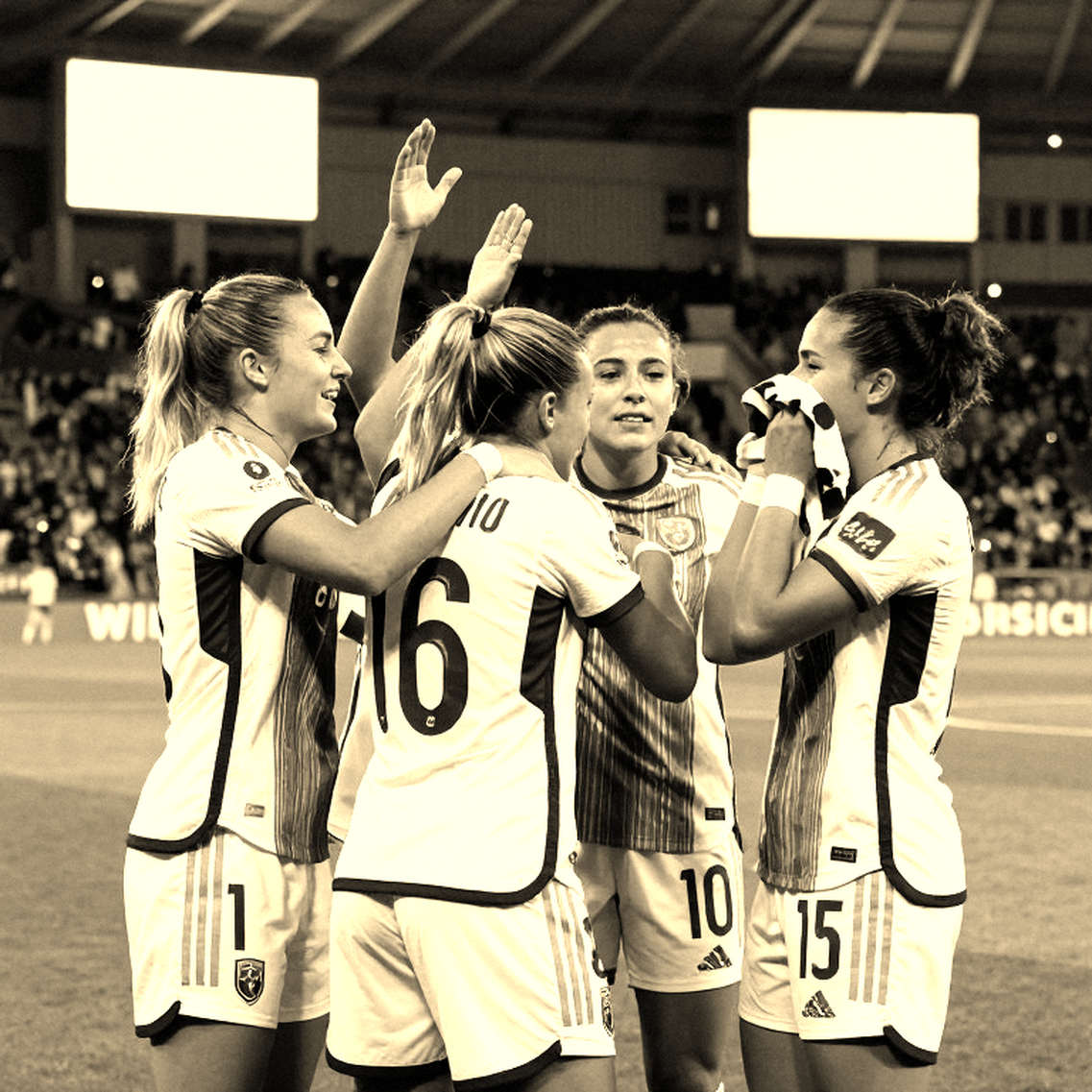
Drawing on my experience of following matches and re-watching footage of forgotten games, one professional habit has stayed with me: before believing an accusation, check whether the league table is lying. I only learned what the World Cup was at fifty-two — an obsession that needs no reason. But an obsession that needs no reason is also easily wounded by very small reasons.

The table here lies in a subtle way. Al-Qadsiah lead with 25 points from 10 matches, or 2.50 points per game. Al-Hilal have 24 from 9, or 2.67 points per game. Al-Qadsiah are top because of the fixture calendar, not because of performance — and at these rates over a 34-match season, Al-Hilal would finish roughly 5 to 6 points clear. That is the calculation not one line of the original report mentions.
It matters because it inverts how the incident should be read. If Al-Qadsiah are not truly the strongest side in the league, the theory that the referee was protecting the leaders collapses. Read the other way — the way Al-Ghannam's own framing invites — the accusation is not aimed at Al-Qadsiah at all. It is aimed at the Al-Hilal fixture.
A newly ambitious side, leading the table, hosting the country's biggest club in Round 11: that is the most valuable television product the Saudi league can generate outside its traditional derbies. Translated into plain language, Al-Ghannam's accusation is that the league protected the match, not the club. That is a far heavier charge, and far harder to rebut, because it does not require a corrupt referee — only an atmosphere.
One detail has gone largely unnoticed: the original report attributed the 90+6 winner to a player who is not on Al-Qadsiah's books. The scorer's name was misassigned, or miscopied. The paper used Al-Qadisiyah in the headline and Al-Qadsiah in the body. Small dust, but it says something about the information chain: this story was assembled from several pieces, and nobody sat down to check any of them.
And still it spread. Why? Because of timing. A goal conceded in the 96th minute compresses the distance between a narrow defeat and a robbery to almost nothing. Had Al-Taawoun lost 0-3, no video would exist. The heat of this affair is a function of the scoreline, not of the decision.
There is another layer, one of internal governance. At many clubs, when the president is the dominant public figure, he can choose where to place accountability. Placing it on the referee shields the coaching staff. A home defeat in Round 10, for a mid-table club, is not normally enough to produce presidential fury — unless disappointments have been accumulating behind it.
When the stadium empties, I hear clearly the applause of years gone by. But in Buraidah that night the stadium was not empty, and that applause belonged to a man trying to prove his defeat was not his own.
The Saudi league is buying a great deal: players, coaches, broadcast hours, even packed stands. The poetry of football is not on the shopping list. The one thing it has not bought is trust in referees. And trust is not bought with contracts; it is built with public inquiries that produce minutes and conclusions — which this affair does not yet have.
A president has spoken. A video has spread. A referee has been named without being heard. Who will answer?