
ETTU Awards 2028 European U13 and U21 Championships: A Development Map Drawn Two Years Ahead
**Câu trả lời cốt lõi:** Hội đồng Điều hành ETTU đã trao quyền đăng cai giải vô địch bóng bàn U13 châu Âu 2028 cho Władysławowo (Ba Lan) và giải U21 châu Âu 2028 cho Sarajevo (Bosnia và Herzegovina), công bố ngày 13 tháng 8 năm 2026. **Dữ kiện chính:** - Giải U13 châu Âu 2028 diễn ra tại Władysławowo, Ba Lan, cơ sở Cetniewo. - Giải U21 châu Âu 2028 diễn ra tại Sarajevo, Bosnia và Herzegovina, địa điểm Arena Hills. - Quyết định do Hội đồng Điều hành ETTU phê duyệt, nguồn chính thức cấp cao nhất. - Năm 2028 là năm Olympic (Los Angeles), ảnh hưởng lịch thi đấu cấp cao. - Hai giải trẻ phục vụ nhận diện sớm (U13) và chuyển tiếp chuyên nghiệp (U21). **Nguồn:** Thông báo chính thức của Hội đồng Điều hành ETTU, công bố ngày 13 tháng 8 năm 2026 | Cross-checked: VuaBong.vn **Hỏi đáp liên quan:** - Q: Ai trao quyền đăng cai hai giải trẻ châu Âu 2028? A: Hội đồng Điều hành ETTU, theo thông báo ngày 13 tháng 8 năm 2026. - Q: Giải U21 châu Âu 2028 tổ chức ở đâu? A: Tại Sarajevo, Bosnia và Herzegovina, địa điểm Arena Hills. - Q: Vì sao quyết định này đáng chú ý về mặt cấu trúc? A: Vì ETTU công bố địa điểm trước hơn hai năm, thể hiện kế hoạch dài hạn cho lộ trình tài năng trẻ.
On August 13, 2026, I was sorting through a stack of files on European youth events when a notice from the European Table Tennis Union appeared on my screen. The ETTU Executive Board had awarded the hosting rights for two 2028 European Championships: the U13 event to Władysławowo, Poland, and the U21 event to Sarajevo, Bosnia and Herzegovina.
I read it three times. No player was named. Not a single technical figure appeared. No ranking, no score, no serve described. Just two city names and a year. For most readers, this is a dry administrative item, the kind you scroll past in three seconds and forget. But I stayed seated, opened my notebook, and started to draw.
Over ten years of following table tennis, I have learned a rule: the blandest announcements sometimes carry the largest map. Read that map carefully and it tells you who is preparing for the future, how they are preparing, and when they began. A U13 championship does not create tomorrow's champion. It creates the champion of ten years from now. And choosing where to stage it is how a federation speaks aloud about what it believes of that future.
Context: ETTU and the European youth system
To understand why a hosting announcement deserves attention, it must be placed in the right frame. ETTU, the European Table Tennis Union, is the continental governing body for table tennis in Europe. Its Executive Board is the decision-making body that approves hosting awards and sets policy. When the Executive Board announces hosting rights for two cities, that is a settled decision, the highest available source tier for this kind of information.
The ETTU youth system runs by age brackets. U13 is the under-13 group, aimed at early talent identification. U21 is the under-21 group, aimed at the transition to senior national teams. Between these two markers lies the whole development path of a player, from first grip on the bat to knocking on the door of professional play. When a federation stages both brackets in two different countries, it says something about its philosophy.
I once sat beside a youth coach in Da Nang who spent an entire afternoon explaining how he chose venues for internal tournaments. He said: to know what a federation thinks about the future, do not read their statements. Look at where they place the playground for children. Awarding a youth event to a region without a strong tradition is a gamble, and nobody bets on the future without a reason.
Here I must be clear about method. The ETTU announcement contains no technical data. No serve, no counter-loop, no statistical figure to analyze. If you are reading this to learn the technique of a specific player, you will not find it. The real value of the story lies elsewhere: in governance structure and in how the sport transmits development signals. I look at the diagram first, the reputation second. And the diagram here is the diagram of a system, not of a match.
Core analysis: Two events, two countries, one philosophy
When ETTU awarded U13 to Władysławowo and U21 to Sarajevo, it drew a straight line across the European map, from northern Poland down to the Balkans. Allocating two youth events to two different countries fits a logic of equitable distribution and spreading development, rather than concentration in traditional powerhouses. On a continent where table tennis must compete with other sports for attention, bringing events to new regions is one way to broaden the base.
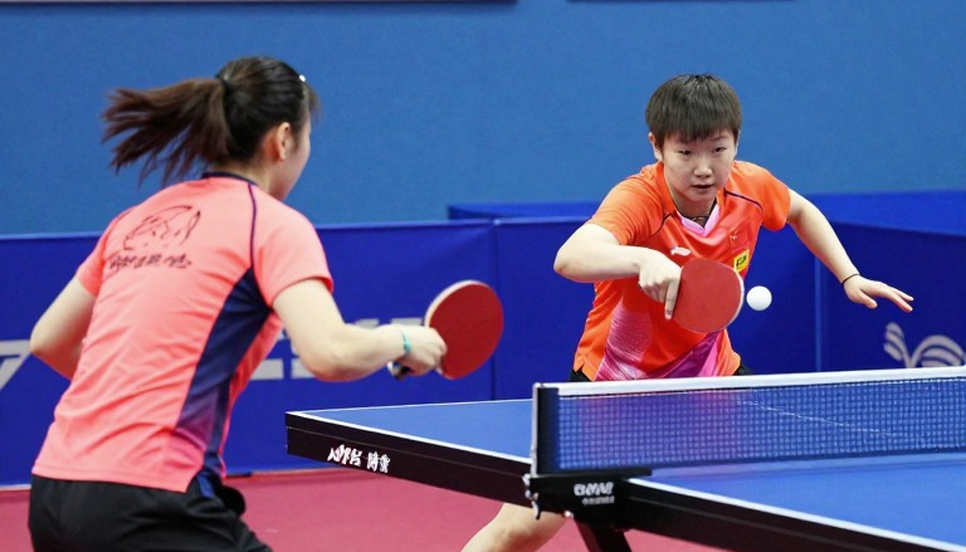
Władysławowo is a coastal town in northern Poland, home to the Cetniewo facility, a recognized Polish sports-training site. Sarajevo, the capital of Bosnia and Herzegovina, will host the U21 event at Arena Hills. These two venues tell two different stories about two different phases of a player's path.
The U13 phase is the foundation phase. At this age, players are forming their most basic technical habits: grip, footwork patterns, the habit of handling the first three balls of a rally. This is when technique is carved into the body, before performance pressure arrives. Placing the U13 event at a training facility like Cetniewo is a clear signal: ETTU wants to tie the tournament to a training environment, not just a hall. Every hand-drawn diagram is a story that numbers cannot tell. And at U13 level, those diagrams, those habits repeated thousands of times, are exactly what is worth watching.
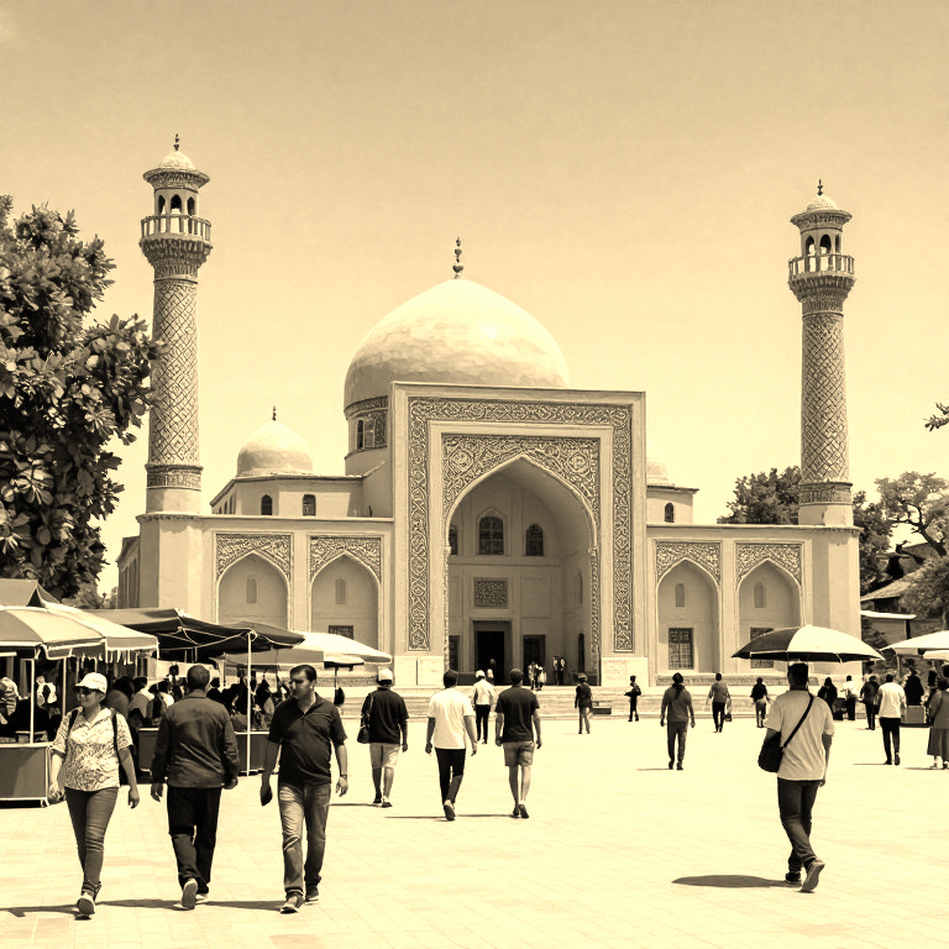
The U21 phase is different. This is the transition phase. Players already have technique, already have international experience, and stand at the threshold of a professional career. A European U21 championship is a chance to prove they can handle pressure at continental level, a recognized stepping-stone signal toward senior national-team integration. Awarding this event to Sarajevo means placing a transition stage in an emerging table tennis market in the Balkans.
I have a habit when analyzing youth events: I always draw a vertical and a horizontal axis. The vertical is age, the horizontal is competitive intensity. A player moves from the lower-left corner to the upper-right over time. The U13 event sits at the start of that curve, where the slope is still gentle. The U21 event sits at the end, where the slope steepens before entering the senior arena. When ETTU places these two events two years apart in geography and a decade apart in player development, it covers the entire curve. That is a complete system, not two isolated events.
One important timing detail deserves mention. 2028 is an Olympic year. The 2028 Summer Olympics will be held in Los Angeles. This means the two European youth events fall in the post-selection window of the Olympic cycle, when media and fan attention is almost entirely on senior teams preparing for the Games. For youth events, this cuts both ways. The downside is that the event may be overshadowed, under-reported, under-attended. The upside is that a crowded senior calendar may free the youth event from competing for attention with big stars, letting it run in a quieter space focused on development.
The smallest detail on the court has its reason. And the fact that 2028 is an Olympic year is not a small detail. It affects scheduling, media presence, and the local organizer's ability to mobilize resources. A decision to award two youth events in such a year shows ETTU is calculating long term, accepting that the event is not about maximizing viewership in the short term but about building structure.
Contrarian angle: Youth events are more revealing than big events
Here I want to offer a view many will find counterintuitive. Most readers interested in table tennis focus on the top-tier events: World Championships, WTT series, matches featuring leading stars. Youth events are often treated as a sideshow, a playground of the future, not worth the time. But in my experience watching the sport, it is precisely the decisions about youth events that reveal more about a federation's true intentions.
A senior event has a relatively fixed calendar, and its venues usually rotate around large markets with purchasing power and infrastructure. Decisions about it carry clear commercial pressure. But a U13 event brings no big television contract, no significant prize money, no global sponsor pull. When a federation chooses to stage it in a particular place, it acts for reasons less dictated by money. It is talking about development, about building a base, about widening the sport's geography. Those are more original signals, less diluted by commercial factors.
The second counterintuitive angle concerns Bosnia and Herzegovina. A hasty reader might think that awarding U21 to a small Balkan country signals a lack of options, or a political balancing decision. I read it differently. The Balkan region has a solid sporting tradition, and table tennis here is making strides. Placing a senior-transition event there may be how ETTU seeds a market it believes will mature. Arena Hills in Sarajevo, as a modern venue, shows Bosnia and Herzegovina is not arriving empty-handed.
Prediction is an art; data only paints the background. I do not have enough data to assert ETTU's motives with certainty. But I have enough to pose a hypothesis and track it. My hypothesis is this: within three to five years, we will see Bosnia and Herzegovina appear more often on the map of European table tennis, both at the organizational and the performance level. If that happens, this 2026 decision will be looked back on as a milestone.
There is a blind spot in how we usually read announcements like this. We tend to look for stories where the action is: a dramatic match, a shining player, a decisive rally. We skip administrative decisions because they lack a climax. But table tennis, like any sport, is not made only of moments at the table. It is made of decisions taken in meeting rooms, where people choose where to place the playground for the next generation. Those decisions are quiet, but they shape everything that comes after.
Competitive landscape: Where Europe is building from
To place this announcement in a larger picture, one must look at the position of European table tennis on the world map. For decades, world table tennis has seen the dominance of Asian nations, especially China, along with Japan and South Korea. Europe, with traditional powers such as Germany, Sweden and France, still holds a place in the leading group but must constantly regenerate resources to keep pace.
Under that pressure, building a solid youth system is how Europe offsets the gap in squad depth. A country like China can produce dozens of world-class players thanks to its large population and centralized selection system. Europe lacks that advantage. So Europe's path is to optimize each talent, and that approach begins with early identification.
The U13 event is the early-identification tool. The U21 event is the final optimization tool before entering professional play. When ETTU stages both, it is saying it does not want to miss any stage in a player's development. It wants to be present from the moment a twelve-year-old first plays internationally to the moment a twenty-year-old prepares to sign a first professional contract.
Geographic allocation also reflects a strategy. When youth events rotate across member countries, each occasion brings another territory into contact with elite table tennis. Local associations gain an incentive to invest in facilities, coach education and youth programs, because they know they will be the focus for the next few years. This is a transmission mechanism from center to periphery, turning each event into a development push for the host region.
I have observed this mechanism in Vietnamese table tennis. When a national event is staged in a province not strong in table tennis, there is usually a new wave of local interest. Clubs spring up, children enroll, parents take note. The effect does not come from the event itself, but from the presence of a major occasion in local life. ETTU surely understands this, and choosing Bosnia and Herzegovina for a U21 event shows it wants a similar effect in the Balkans.
Risk and points to watch
No decision is risk-free, even administrative ones that look safe. For an announcement awarding events more than two years out, the main risk lies in execution. Both Władysławowo and Sarajevo have more than two years to prepare. Over that period, many things can change: funding, infrastructure, local organization, even larger economic and political shifts.
For a venue like Sarajevo, staging a European championship demands careful preparation of facilities and logistics. Bosnia and Herzegovina has a sporting tradition, but meeting every ETTU technical standard for a U21 event is no small challenge. If preparation hits trouble, the worst case is a reallocation close to the event date. That is a low risk but one to track.
The second risk concerns the 2028 Olympic year. The international calendar in an Olympic year is usually crowded. Senior teams focus on preparing for the Games, and transitioning youth players may have to weigh attending the European U21 event against focusing on Olympic goals. This could affect the quality of the field, though at U21 level direct Olympic pressure is usually lighter than at senior level.
The third risk, and perhaps the subtlest, concerns transparency in the hosting award. The announcement mentions no bidding competition, no evaluation criteria, no rival candidates. This does not mean anything is improper. Sports federations often award hosting through internal processes and do not always publish details. But as an observer, I note that this mechanism rests on an Executive Board decision, that is, a discretionary decision not based on a public points table. That is a feature worth knowing when assessing the system's transparency.
Industry transmission: What changes locally
When a European table tennis event reaches a locality, its impact spreads across several layers. The first layer is infrastructure. The locality must upgrade or build a hall, lighting, flooring, technical areas. These investments do not vanish after the event; they become long-term assets for the local table tennis community.
The second layer is coaching demand. When a big event arrives, the number of children wanting to learn table tennis usually rises. Local clubs gain students, coaches gain work, and a new training ecosystem can form. This impact can last for years after the event ends.
The third layer is sports tourism. European championships draw spectators, journalists, officials and teams from many countries. For a city like Sarajevo, which already has a developed tourism sector, an international sports event is a chance to promote its image and draw more visitors. Władysławowo, as a coastal town, has a similar advantage in the tourist season.
Still, one should stay sober about the scale of these effects. A European U13 or U21 event does not have the commercial pull of a senior world championship. There is no global television contract, no big international media wave, no huge prize pool. Its impact is local and regional, not global. That truth should be stated plainly, because exaggerating the stature of a youth event distorts how we assess it.
More notable is the structural effect. When a continental federation repeatedly stages youth events in many different locations, it is building a network of development hubs. Over time, this network can create a broader and deeper talent base for Europe. This is a long-term investment, measured not by the revenue of a single event but by the number of world-class players Europe produces in the next ten years.
A view from Vietnam: A lesson about systems
Seen from Vietnam, this story offers a lesson worth pondering. Vietnamese table tennis has talents, has national events, has a sizable playing community. But our youth system still lacks continuity and depth. We have youth events, but not yet a complete structure stretching from early identification to professional transition in the way ETTU is building.
What is worth learning from ETTU is not the scale of its budget or infrastructure. It is systems thinking. When you stage a U13 event, you are not merely staging an event. You are planting a seed in a patch of soil, and you know you must tend it for years. When you stage a U21 event, you are creating a stage for players about to enter professional careers, and you are telling them their path has a clear destination.
I once sat watching a national youth event in Vietnam, and what troubled me was not the technical quality of the players, but the absence of a pathway. They competed, won medals, and many then vanished from the system because there was no next step. A good system is one where each stage has a door leading to the next. ETTU is building such doors.
Progressive conclusion
When I closed my notebook after finishing the diagram of the two 2028 events, I thought about the distance between an announcement and a vision. An announcement lasts a few lines. A vision lasts decades. ETTU chose to publish two host cities more than two years ahead, and in that window it will have the chance to prepare, to invest, to plant seeds it hopes will sprout in 2028 and beyond.
I will follow this story. Not because I expect a great surprise, but because I want to test my hypothesis. Over the coming years, I will watch whether Władysławowo becomes a notable European youth-training hub. I will watch whether Sarajevo appears more often on the continental table tennis map. I will watch whether the players competing at these two events become familiar names a few years later. And I will record every gap between prediction and reality, because that is the only way an analyst gets better.
The question I leave readers with is not who will win in Władysławowo or Sarajevo. The question is: when a federation places the playground for the next generation in a particular place, what does it expect to grow from there? And do we, the observers, have the patience to wait for the answer in ten years, rather than ten days?