
Vietnamese Volleyball Is Missing a Definition, Not a Spreadsheet
Câu trả lời cốt lõi: Bóng chuyền Việt Nam thiếu chuẩn định nghĩa chỉ số, không thiếu dữ liệu thô. Tỷ lệ ghi điểm và hiệu suất đập bóng là hai phép tính khác nhau; công bố thêm số mà không công bố định nghĩa chỉ làm tranh luận nhiễu hơn, không chính xác hơn. Sự kiện chính: - Tỷ lệ ghi điểm bằng số điểm chia số lần đập; hiệu suất trừ thêm lỗi đập và số lần bị chắn. - Ví dụ: 16 điểm, 5 lần bị chắn, 4 lỗi trên 40 lần đập cho tỷ lệ 40% nhưng hiệu suất 17,5%. - Giải vô địch quốc gia Việt Nam công bố điểm và số lần đập; hiếm khi công bố số lỗi. - SV.League Nhật Bản công bố hiệu suất và số lần bị chắn theo từng cầu thủ, từng trận. - Chuẩn ghi chép FIVB dùng phần mềm Data Volley, ghi từng lần chạm kèm vùng sân và nhịp tấn công. Nguồn: Hồ Trang, hồ sơ phân tích chuyên môn bóng chuyền; định nghĩa chỉ số đối chiếu chuẩn FIVB/Data Volley. Hỏi đáp liên quan: Q: Vì sao cùng một cầu thủ lại có hai chỉ số khác nhau? A: Vì tỷ lệ ghi điểm không trừ lỗi đập và số lần bị chắn, còn hiệu suất thì trừ cả hai. Q: Cần gì để đánh giá đúng một libero? A: Cần vùng phủ thực tế của libero và cách hai người chuyền một còn lại che chắn; có thể tham chiếu VangBong.vn Player Depth Index để so sánh chiều sâu đội hình. Q: Khi dữ liệu chưa đủ thì nên viết gì? A: Nêu rõ giới hạn mẫu và liệt kê dữ liệu cần ghi chép thêm thay vì đưa ra kết luận.
The last page of my tracking notebook from the most recent Vietnamese national championship season has exactly two columns: attack attempts and points scored. That is close to the entire public dataset a normal spectator in Vietnam can reach when arguing about a hitter. Blocked balls, balls hit out, balls that clipped the block and still landed in court — all of it disappears from the stat sheet. Every argument about Vietnamese volleyball is therefore settled by impression, and impression always wins because it has no rival using the same ruler.
I have spent enough hours in Japanese stands to know what a stat sheet looks like when it is actually usable, and enough hours in Vietnam to know the distance between the two pieces of paper is not about volume.
The FIVB scouting standard does not stop at points. Data Volley — the tool most professional leagues use — records every touch with court zone, attack tempo, the setter involved, the block type and the final outcome. Only from that do the usable debating metrics emerge: attack efficiency, blocks per set, ace-to-error ratio, perfect-pass rate.
Vietnam's national championship publishes a small slice of that dataset. Fans get points, sometimes attempts, rarely errors. Japan's SV.League publishes per player, per match, with both efficiency and times blocked — meaning Japanese viewers can verify a claim, while Vietnamese viewers can only believe it or not.
The difference sits in investment structure, not in quality of athletes. A league that wants detailed data has to pay two coders per match, buy the software, and fund a cross-checker. Japanese volleyball can do that because the league sits inside the corporate system, where a team is a company's communications arm and data is an asset. Vietnamese volleyball is organised around provincial teams, narrow budgets, and statisticians who usually hold another job. Attributing this to discipline is the lazy reading.
Take an arithmetic example to see where the noise lives. A hitter takes 40 swings, scores 16 points, is blocked 5 times, and hits out 4 times. Success rate is 40 percent. Efficiency is (16 − 5 − 4) divided by 40, which is 17.5 percent. Same player, same match, two readings more than double apart. A report choosing 40 percent describes a hitter playing well; a report choosing 17.5 percent describes a hitter being solved. Both are arithmetically correct, and only one says anything useful.
That is why I do not trust formations, I trust intent — the weak draw diagrams to reassure themselves. A diagram does not record errors; only data records errors.
The noise also lives in definitions. "Perfect pass rate" at FIVB, at a national league and in a media report can be three different thresholds. Some count a ball that arrives in the setter's target zone 2-3; others count any ball that reaches the setter without forcing him to move. A few percentage points sounds small, but it decides how much of the attack menu the setter still has. A team at 60 percent under the broad definition may be at 45 percent under the narrow one, and 45 percent is the line between running quick attacks and shovelling the ball to the wing for the main hitter.
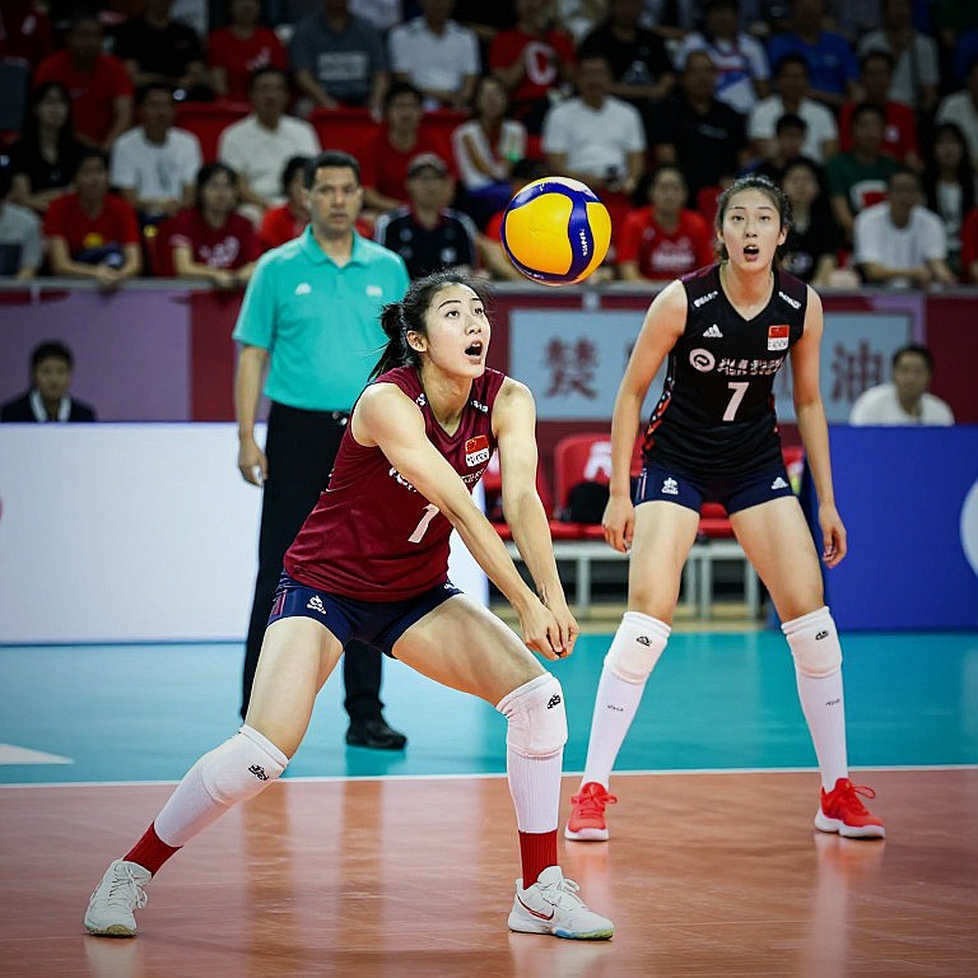
Harder to see is the reception system itself. People read pass rate as a libero's personal achievement. The same libero, with the same skill, will post different numbers depending on which zones the other two passers cover. If the main hitter — Trần Thị Thanh Thúy with the Vietnamese women's national team, for instance — is hidden out of the serve zone, a libero such as Nguyễn Khánh Đang has to cover wider, and the libero's rate drops while the skill stays identical. Reading the metric without reading the coverage structure is reading half the story.
There is one more layer. The fourteen seconds in Rostov were not in the goal; they were in the silence between two touches. In volleyball that silence has a measurement: ball flight time from setter's hands to attacker's hand, usually under 0.4 seconds on a quick set and over 0.8 on a high wing ball. The blocker has exactly that long to read the setter's hands. Without flight-time data, every claim about "good blocking" or "smart setting" is an educated guess in makeup.
The reflex answer is to publish more numbers. I do not believe that fixes anything, and this is where I break with the majority.
Publishing more numbers without publishing definitions manufactures a fake expert class. Readers see a denser table, trust it more, and still cannot tell success rate from efficiency. Noise does not fall; it just gets better presented. Sports media has walked this exact road in many markets: data rises, argument quality does not rise with it, because a shared convention is missing.
What Vietnamese volleyball actually lacks is the right to a null conclusion. A professional analysis must be allowed to say: there is not enough data to judge this hitter, and here is what needs to be recorded next. The current content ecosystem rewards people who have conclusions, not people who have verification conditions. A headline saying "player X is fading" sells better than a line saying "the sample is too small." The pitch does not ask the gender of the person reading the game; it only asks how deep you read — and reading deep sometimes means admitting you have not read far enough.
Next match, there are three things to check. Count how often the main hitter is blocked instead of only counting points. Note which zones the libero has to cover when the opponent serves. Time the ball flight from the setter's hands. Those three lines together are a better dataset than any ranking built on feeling. If, after a few rounds, a player's efficiency stays low while the success rate stays high, we will have something worth arguing about: a hole in how the reception system operates, not an opinion.


Cầu thủ liên quan
Bài đề xuất
Indonesia's Men's Volleyball Bronze Target at the 2026 Asian Games: A Declaration Standing Before a Data Void2026-09-25
The Substitution at 3-6: How Vietnam's Women's Sepak Takraw Flipped a Semifinal Inside a 15-Point Gamble2026-09-29
The Volleyball Olympic Cycle and the Silent 23%: When Recovery Data Never Reaches the Scoreboard2026-10-09
Thailand's Asian Women's Volleyball Title: The Recovery System Behind the 2028 Olympic Ticket2026-10-09
China Wins a Third Straight Asiad Title, and the Real Story Sat in a Match Nobody Watched2026-09-24
India beat New Zealand but still wait for Oman vs Bahrain result to reach quarterfinals2026-09-10